
 Cardiology
 Cardiovascular Thoracic Surgery
 Endocrinology
 Neurology
 Neuro Surgery
 Nephrology
 Urology
 Gastroenterology
 Pulmonology
 Plastic Surgery
 Nuclear Medicine
 Anesthesiology
 Transfusion Medicine
 Medical Oncology
 Surgical Oncology
 Radiation Oncology
 Critical Care Medicine
 ENT
 General Medicine
 General Surgery
 Gynaecology & Obstetrics
 Ophthalmology
 Orthopaedics
 Paediatrics and Neonatology
 Spine Surgery
 Cathlab
 MRI
(3.0 Tesla)
 CT
Scan (128 Slice)
 2D Echo
 TMT
 PFT
 EEG
 EMG
& NCS
 Audiometry
 Flexible Laryngoscopy
 Endoscopy
& Colonoscopy
 Bronchoscopy
 Allergy Testing (Skin Prick Test-SPT)
 Microbiology
 Pathology
 Radio-diagnosis
 Radiation Therapy
 Physiotherapy
 Radiology
 Pharmacy
 AKU
Dialysis
 Emergency Service
 Executive
Health Checkup
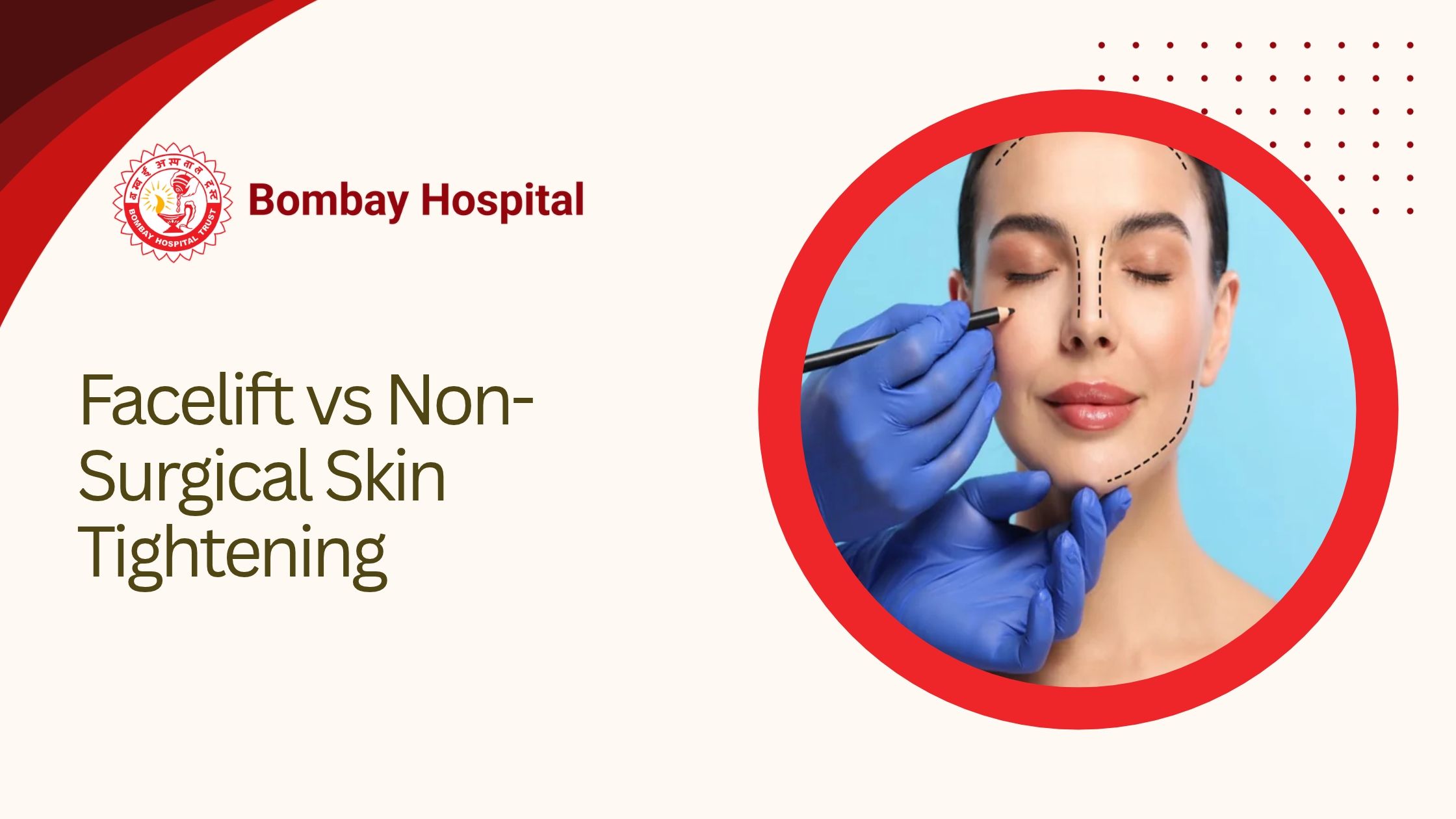
As we age, changes in skin elasticity, collagen production and facial fat distribution can gradually affect our appearance. The cheeks may begin to sag, the jawline may lose definition, wrinkles may become more noticeable and loose skin may develop around the neck.
Today, several cosmetic treatments are available to address these changes. Two commonly considered options are facelift surgery and non-surgical skin tightening. Both aim to improve facial firmness and reduce visible signs of ageing, but they differ significantly in their techniques, results, recovery periods and suitability.
A facelift is a surgical procedure that repositions underlying facial tissues and removes excess skin, while non-surgical skin tightening uses technologies such as ultrasound, radiofrequency or laser-based treatments to stimulate collagen production and improve skin firmness.
If you are considering a Facelift in Mumbai, understanding the difference between these approaches can help you choose a treatment that matches your facial concerns and expectations.
What Is a Facelift?
A facelift, medically known as rhytidectomy, is a cosmetic surgical procedure designed to address visible signs of ageing in the lower face and neck.
As the skin loses elasticity and underlying tissues gradually shift with age, the cheeks may droop, jowls may develop along the jawline and loose skin may become more noticeable around the neck.
During facelift surgery, a plastic surgeon makes carefully planned incisions, usually around the ears and sometimes extending into the hairline. The underlying facial tissues are repositioned, excess skin is removed and the remaining skin is redraped to create a more defined facial contour.
Depending on the patient's concerns, a facelift may address:
- Sagging cheeks and lower facial skin
- Deep folds around the nose and mouth
- Jowls along the jawline
- Loose skin around the lower face
- Excess skin and laxity around the neck
The surgical technique depends on facial anatomy, the degree of skin laxity and the desired outcome. A facelift does not stop the natural ageing process, but it can provide a more significant improvement in facial sagging than non-surgical treatments.
What Is Non-Surgical Skin Tightening?
Non-surgical skin tightening refers to cosmetic treatments that aim to improve skin firmness without traditional surgical incisions.
These treatments commonly use controlled energy to stimulate collagen production or remodel existing collagen within the skin and underlying tissues.
As collagen production changes with age, the skin gradually loses some of its firmness and elasticity. Certain energy-based treatments aim to encourage the body's natural collagen response, helping improve skin texture and mild to moderate laxity over time.
Common non-surgical skin tightening options include:
Radiofrequency Skin Tightening
Radiofrequency (RF) treatments use controlled energy to heat targeted skin layers. This may stimulate collagen remodelling and gradually improve skin firmness.
Some radiofrequency procedures are non-invasive, while others involve needles or specialised devices. The treatment method, recovery and risks depend on the technology used.
Ultrasound Skin Tightening
Certain ultrasound-based treatments deliver focused energy to selected tissue depths. The controlled heating may stimulate collagen production and gradually improve mild skin laxity.
Results generally develop over time rather than appearing immediately.
Laser-Based Skin Treatments
Some laser treatments improve skin texture, fine lines and signs of sun damage. Specific laser technologies may also provide a degree of skin tightening by stimulating collagen remodelling.
Not all laser treatments work in the same way, so the appropriate option depends on whether the main concern is skin texture, pigmentation, wrinkles or laxity.
Microneedling with Radiofrequency
Radiofrequency microneedling combines fine needles with radiofrequency energy to deliver controlled heat into targeted skin layers.
It may help improve selected concerns, including skin texture, fine lines and mild skin laxity. The depth and intensity of treatment must be selected according to the patient's skin condition and medical suitability.
These procedures generally involve less recovery time than a traditional facelift, but their results are usually more modest.
Facelift vs Non-Surgical Skin Tightening: Key Differences
Although both treatments aim to improve facial appearance, they address different levels of ageing.
| Comparison | Facelift Surgery | Non-Surgical Skin Tightening |
|---|---|---|
| Treatment type | Surgical procedure | Non-surgical or minimally invasive, depending on technology |
| Main purpose | Repositions underlying tissues and removes excess skin | Improves skin firmness and collagen remodelling |
| Best suited for | More noticeable sagging and loose skin | Mild to moderate skin laxity |
| Anaesthesia | Usually general anaesthesia | Depends on the treatment; may involve topical or local anaesthesia |
| Incisions | Surgical incisions are required | Non-invasive options do not require surgical incisions |
| Results | More significant improvement in facial sagging | Usually gradual and more subtle |
| Recovery | Generally requires weeks of recovery | Often little downtime, although some procedures require recovery |
| Scarring | Surgical scars are expected | Usually no traditional surgical scars |
| Maintenance | Ageing continues, but results can last for years | Repeat treatments may be recommended |
| Risks | Includes surgical and anaesthesia-related risks | Depends on the device and may include burns, swelling, pigmentation changes or nerve injury |
The right treatment is not necessarily the one that produces the most dramatic change. It is the one that appropriately addresses your concerns while considering your health, preferences and expectations.
Which Treatment Is Better for Different Signs of Ageing?
The choice between a facelift and non-surgical skin tightening depends largely on the type and severity of facial ageing.
When a Facelift May Be More Suitable
A facelift may be considered when there is:
- Significant sagging around the cheeks and jawline
- Noticeable jowls
- Loose skin around the lower face and neck
- Deep folds associated with tissue descent
- Excess skin that cannot be adequately addressed through non-surgical treatments
Because facelift surgery addresses underlying tissues as well as excess skin, it can provide a more substantial improvement in facial contour.
When Non-Surgical Skin Tightening May Be More Suitable
Non-surgical treatments may be considered when there is:
- Mild to moderate skin laxity
- Early signs of facial ageing
- Slight loss of skin firmness
- Fine lines and changes in skin texture
- A preference to avoid surgery and accept more gradual results
These treatments may also be useful for individuals who want to maintain skin quality after other facial rejuvenation procedures.
However, non-surgical skin tightening cannot remove significant excess skin or reposition descended facial tissues to the same extent as a facelift.
What Results Can You Expect?
The results differ depending on the treatment selected, the individual's skin condition and the extent of ageing.
Results After Facelift Surgery
A facelift can provide a more noticeable improvement in facial contour by repositioning underlying tissues and removing excess skin.
The face may initially appear swollen or bruised after surgery. As healing progresses, the contours become more apparent.
Results can last for several years, although the face continues to age naturally. Factors such as genetics, sun exposure, smoking and lifestyle habits can influence how the results change over time.
Results After Non-Surgical Skin Tightening
Non-surgical treatments generally produce gradual improvements rather than an immediate surgical-style lift.
Collagen remodelling takes time, so visible changes may develop over several weeks or months, depending on the technology used.
The extent and duration of improvement vary. Some patients may need multiple sessions or periodic maintenance treatments.
It is important to understand that non-surgical treatments do not provide the same degree of correction as facelift surgery when significant sagging is present.
What Is the Recovery Time for Each Treatment?
Recovery is another important consideration when choosing between these approaches.
Facelift Recovery
Facelift surgery involves a longer recovery period because it requires incisions and surgical tissue repositioning.
Patients may experience:
- Swelling and bruising
- Temporary tightness or numbness
- Mild to moderate discomfort
- Temporary changes in skin sensation
Initial recovery generally takes a few weeks, although complete healing and scar maturation can take longer.
Patients should follow their surgeon's instructions regarding wound care, sleeping position, physical activity and follow-up visits.
Non-Surgical Skin Tightening Recovery
Most non-invasive skin tightening procedures involve less downtime than surgery.
Depending on the technology, temporary effects may include:
- Redness
- Mild swelling
- Tenderness
- Temporary sensitivity
- Bruising in some cases
Many people can resume routine activities relatively quickly, although recovery varies by treatment type and intensity.
Minimally invasive procedures, such as radiofrequency microneedling, may involve additional downtime and specific aftercare.
Are Facelift and Non-Surgical Skin Tightening Safe?
Both approaches can be performed safely in appropriately selected patients by qualified and experienced medical professionals. However, neither treatment is completely risk-free.
Possible Risks of Facelift Surgery
Potential complications include:
- Bleeding or haematoma
- Infection
- Unfavourable scarring
- Temporary or permanent changes in skin sensation
- Nerve injury
- Poor wound healing
- Asymmetry
- Anaesthesia-related complications
A detailed medical assessment helps identify individual risk factors before surgery.
Possible Risks of Non-Surgical Skin Tightening
Depending on the device and treatment method, possible side effects include:
- Redness and swelling
- Bruising or tenderness
- Skin burns
- Changes in pigmentation
- Temporary numbness
- Skin texture changes
- Rare nerve-related complications
The safety of these treatments depends on selecting an appropriate device, using suitable treatment settings and having the procedure performed by a trained professional.
Can Facelift Surgery Be Combined with Non-Surgical Treatments?
Yes. In selected patients, non-surgical treatments may complement facelift surgery.
A facelift primarily addresses sagging tissues and excess skin. Other procedures may be recommended to improve concerns that a facelift does not fully address, such as skin texture, pigmentation, fine lines or facial volume loss.
Depending on the patient's needs, a treatment plan may include:
- Laser skin resurfacing
- Radiofrequency-based treatments
- Chemical peels
- Selected injectable treatments
- Fat grafting for facial volume restoration
The timing and combination of treatments should be determined by the treating specialist. Not every patient requires multiple procedures.
How to Choose the Right Facelift Treatment in Mumbai?
Choosing between surgery and non-surgical skin tightening should begin with a proper facial assessment rather than selecting a procedure based only on popularity or advertised results.
If you are exploring a Facelift in Mumbai, consider the following points before making a decision:
Understand your primary concern: Determine whether your main concern is loose skin, sagging cheeks, jowls, fine lines or poor skin texture.
Evaluate the degree of skin laxity: Significant sagging may require a surgical approach, while early changes may respond to non-surgical treatments.
Discuss your expectations: Explain the type of improvement you want and ask what results are realistically achievable.
Check the surgeon's qualifications: Choose a suitably qualified plastic surgeon with relevant experience in facial rejuvenation.
Understand recovery and risks: Discuss downtime, possible complications, costs and follow-up requirements.
Ask about alternatives: A specialist should explain whether surgery, non-surgical treatment or a combination approach is appropriate.
A personalised consultation can help you avoid choosing a treatment that does not adequately address your concerns.
Frequently Asked Questions
A facelift generally provides more significant improvement for pronounced skin sagging, loose skin and jowls. Non-surgical skin tightening may be more suitable for mild to moderate laxity and people who prefer to avoid surgery. The appropriate option depends on individual facial ageing and treatment goals.
There is no fixed age for facelift surgery. Some individuals develop noticeable facial sagging earlier, while others maintain good skin elasticity for longer. Skin condition, facial anatomy, general health and personal expectations are more important than age alone.
Non-surgical treatments may improve mild skin laxity, but they cannot remove significant excess skin. A facelift may be more appropriate when there is substantial loose skin around the cheeks, jawline or neck.
The duration varies according to the technology, skin condition, treatment settings and ageing process. Some treatments may require repeat sessions or maintenance to preserve the improvement.
A facelift can improve certain deep folds and wrinkles associated with sagging tissues. However, it does not address every type of wrinkle, particularly dynamic expression lines or surface-level skin texture concerns. Additional treatments may be recommended for these issues.
The procedure is generally performed under anaesthesia, so patients do not experience surgical pain during the operation. Some swelling, tightness and discomfort can occur during recovery and are managed according to the surgeon's instructions.
Non-surgical treatments can improve mild skin laxity and selected signs of ageing, but they cannot reproduce the tissue repositioning and excess skin removal achieved through facelift surgery. They are alternatives for selected concerns, not direct replacements for every surgical result.
Make an Informed Decision About Facial Rejuvenation
Facelift surgery and non-surgical skin tightening both have a role in facial rejuvenation, but they are designed to address different levels of ageing. While a facelift can provide more substantial improvement in sagging skin and facial contours, non-surgical treatments may help improve mild laxity with less downtime.
If you are considering a Facelift in Mumbai, consult an experienced plastic surgeon to discuss your facial concerns, medical suitability and expected results. A personalised assessment can help you understand whether surgical lifting, non-surgical skin tightening or a combination of treatments is the most appropriate approach.
Book an Appointment