
 Cardiology
 Cardiovascular Thoracic Surgery
 Endocrinology
 Neurology
 Neuro Surgery
 Nephrology
 Urology
 Gastroenterology
 Pulmonology
  Plastic Surgery
 Nuclear Medicine
  Anesthesiology
  Transfusion Medicine
  Medical Oncology
  Surgical Oncology
  Radiation Oncology
  Critical Care Medicine
  ENT
ENT General Medicine
 General Surgery
 Gynaecology & Obstetrics
 Ophthalmology
 Orthopaedics
 Paediatrics and Neonatology
  Spine Surgery
 Cathlab
 MRI
(3.0 Tesla)
MRI
(3.0 Tesla) CT
Scan (128 Slice)
CT
Scan (128 Slice) 2D Echo
 TMT
TMT PFT
PFT EEG
EEG EMG
& NCS
EMG
& NCS Audiometry
 Flexible Laryngoscopy
 Endoscopy
& Colonoscopy
Endoscopy
& Colonoscopy Bronchoscopy
 Allergy Testing (Skin Prick Test-SPT)
 Microbiology
 Pathology
 Radio-diagnosis
 Radiation Therapy
 Physiotherapy
 Radiology
 Pharmacy
 AKU
Dialysis
AKU
Dialysis  Emergency Service
 Executive
Health Checkup
Executive
Health Checkup
Fatty liver disease is becoming increasingly common, and many people discover it unexpectedly during an ultrasound or routine health check-up. If your report mentions Grade 1, Grade 2, or Grade 3 fatty liver, you may naturally wonder what the grading means, whether it is serious, and what you should do next.
Fatty liver refers to excess fat accumulation in the liver. It can be associated with obesity, insulin resistance, type 2 diabetes, high cholesterol, alcohol use, and several other factors. Importantly, the grade reported on an ultrasound does not by itself tell you how much liver damage has occurred.
The good news is that fatty liver can often be managed through lifestyle changes and appropriate medical care. Early evaluation is particularly important when other metabolic health conditions are present.
If you have been diagnosed with fatty liver and are looking for Fatty Liver treatment in Jaipur, understanding your report is a useful first step.
What Is Fatty Liver?
The liver naturally contains a small amount of fat. When excess fat accumulates in the liver, it may be described as fatty liver or hepatic steatosis.
There are two broad categories:
Metabolic dysfunction-associated steatotic liver disease (MASLD): Fat accumulation associated with metabolic risk factors such as obesity, diabetes, high blood pressure, or abnormal cholesterol.
Alcohol-associated liver disease: Liver changes related to excessive alcohol consumption.
Some people can have more than one contributing factor.
Fatty liver may cause no symptoms, especially in its early stages. It is therefore sometimes discovered during an ultrasound, blood tests, or evaluation for another health concern.
What Do Grade 1, Grade 2 and Grade 3 Mean?
Fatty liver grading is commonly used on ultrasound reports to describe the degree of fat accumulation visible in the liver.
In general:
- Grade 1: Mild fatty change
- Grade 2: Moderate fatty change
- Grade 3: Severe or marked fatty change
However, these grades should not be interpreted as direct measurements of liver scarring or permanent damage.
Ultrasound can help identify fatty changes, but it has limitations in determining inflammation and fibrosis. Your doctor may recommend additional tests based on your risk factors and other results.
Grade 1 Fatty Liver
Grade 1 is generally considered mild fatty liver.
At this stage, the amount of fat seen on imaging is relatively limited. Many people have no noticeable symptoms and may discover the condition during a routine ultrasound.
What can contribute to Grade 1 fatty liver?
Common risk factors include:
- Being overweight or obese
- High blood sugar or insulin resistance
- Type 2 diabetes
- High cholesterol or triglycerides
- Physical inactivity
- Unhealthy dietary patterns
- Excessive alcohol consumption
- Certain medications or medical conditions
Grade 1 fatty liver does not necessarily mean that the liver is severely damaged.
However, it should not simply be ignored. Early lifestyle changes can help reduce metabolic risk and may improve liver fat.
Can Grade 1 Fatty Liver Be Reversed?
In many people, improving the underlying risk factors can reduce liver fat.
Your doctor may recommend:
- Gradual weight loss if you are overweight
- Regular physical activity
- A balanced diet
- Better blood sugar control
- Management of cholesterol and triglycerides
- Avoiding or reducing alcohol, depending on the cause
- Regular medical follow-up
Avoid extreme diets or unproven "liver detox" products. Sustainable lifestyle changes are generally more useful than quick-fix approaches.
Grade 2 Fatty Liver
Grade 2 indicates moderate fatty change on imaging.
At this stage, fat accumulation is more noticeable than in Grade 1. However, the ultrasound grade still does not tell you by itself whether there is significant inflammation or fibrosis.
Some people with Grade 2 fatty liver may continue to have no symptoms.
Others may experience nonspecific symptoms such as:
- Fatigue
- General weakness
- Mild abdominal discomfort
These symptoms are not specific to fatty liver and can have many other causes.
Why Does Grade 2 Need Attention?
Moderate fatty liver may be associated with a higher risk of progressive liver disease in some people, particularly when metabolic risk factors or liver inflammation are present.
Your doctor may therefore assess:
- Liver enzymes
- Blood sugar
- HbA1c
- Cholesterol and triglycerides
- Blood pressure
- Body weight and waist circumference
- Other markers of liver health
Depending on your risk profile, additional fibrosis assessment may be recommended.
Grade 3 Fatty Liver
Grade 3 indicates severe or marked fatty change visible on ultrasound.
It generally warrants careful medical evaluation, particularly when accompanied by abnormal liver tests, diabetes, obesity, or other metabolic risk factors.
Importantly, Grade 3 does not automatically mean cirrhosis.
Cirrhosis is advanced scarring of the liver, while ultrasound fatty-liver grading primarily describes the amount of fat visible on imaging. Further assessment may be needed to determine whether significant fibrosis or other liver damage is present.
Does Fatty Liver Cause Symptoms?
Many people with fatty liver have no symptoms.
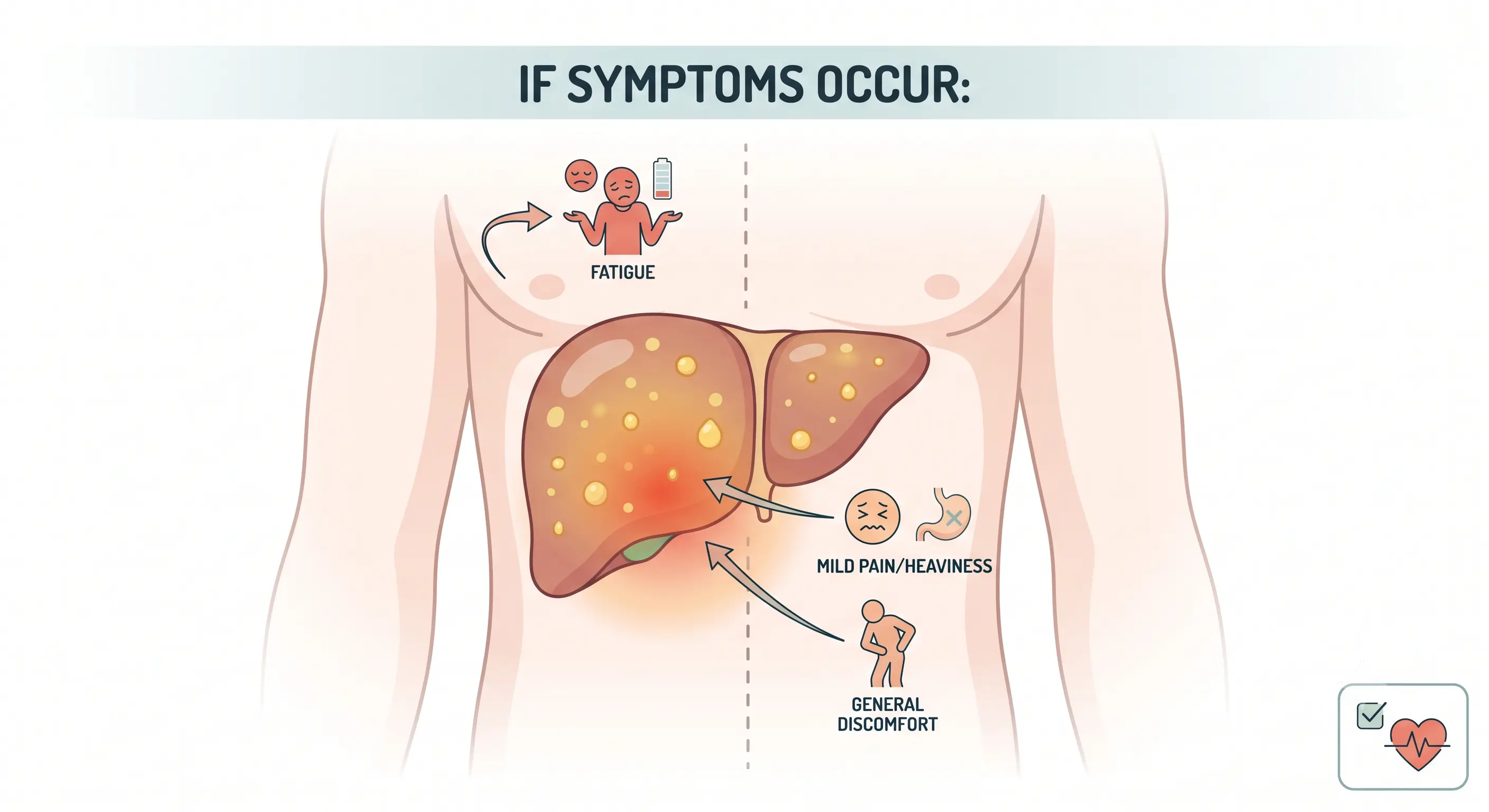
When symptoms occur, they may include:
- Fatigue
- General discomfort
- Mild pain or heaviness in the upper-right abdomen
More concerning symptoms such as jaundice, abdominal swelling, vomiting blood, black stools, severe confusion, or significant swelling of the legs can indicate advanced liver disease or another serious condition and require prompt medical attention.
Do not wait for symptoms before getting evaluated if you have known risk factors for liver disease.
What Causes Fatty Liver?
Fatty liver can have several causes.
1. Excess Weight
Being overweight or obese is an important risk factor for metabolic fatty liver disease.
Excess body fat, particularly around the abdomen, is associated with insulin resistance and increased liver fat.
2. Diabetes and Insulin Resistance
Insulin resistance and type 2 diabetes are strongly associated with fatty liver.
Poorly controlled blood sugar can contribute to increased fat accumulation in the liver.
3. High Cholesterol and Triglycerides
Abnormal levels of blood lipids may increase the likelihood of liver fat accumulation.
4. Alcohol
Excessive alcohol consumption can cause alcohol-associated fatty liver and, over time, more serious liver damage.
5. Certain Medicines and Medical Conditions
Some medications and less common medical conditions can also contribute to fatty liver.
This is why medical evaluation is important rather than assuming that diet or alcohol is always the cause.
How Is Fatty Liver Diagnosed?
Doctors may use several pieces of information to evaluate fatty liver.
Ultrasound
Ultrasound is commonly used to identify fat accumulation in the liver.
It can help classify the degree of steatosis but has limitations in determining the amount of fibrosis or inflammation.
Blood Tests
Blood tests may include liver enzymes and other investigations to assess liver health and identify associated metabolic conditions.
Fibrosis Assessment
Depending on your risk factors, your doctor may use non-invasive fibrosis scores or tests such as elastography to estimate the likelihood of liver scarring.
Additional Testing
Further investigations may be recommended when the diagnosis is uncertain or when another liver condition needs to be ruled out.
How Is Fatty Liver Treated?
Treatment depends on the underlying cause and the individual's overall health.
For many people with metabolic fatty liver disease, lifestyle changes are a major part of treatment.
1. Work Towards a Healthy Weight
If you are overweight, gradual and sustained weight loss can reduce liver fat and may improve other metabolic risk factors.
Your doctor or dietitian can help establish a realistic goal based on your health.
Avoid crash diets and rapid weight-loss programs without medical guidance.
2. Follow a Balanced Diet
A liver-friendly eating pattern generally emphasizes:
- Vegetables
- Fruits in appropriate portions
- Whole grains
- Pulses and legumes
- Lean protein
- Nuts and seeds in moderation
- Healthy sources of unsaturated fats
Try to limit excessive intake of:
- Sugary drinks
- Refined carbohydrates
- Highly processed foods
- Foods high in saturated fat
- Excess calories
A diet plan should be personalized to your nutritional and medical needs.
3. Exercise Regularly
Physical activity can help reduce liver fat and improve insulin sensitivity even when significant weight loss does not occur.
Aim for regular aerobic activity combined with strength exercises, according to your fitness level and doctor's advice.
If you have another medical condition, speak with your healthcare provider before starting a new exercise program.
4. Manage Diabetes and Cholesterol
If you have diabetes, high cholesterol, high blood pressure, or other metabolic conditions, controlling them is an important part of protecting your liver.
Take prescribed medicines regularly and attend recommended follow-up appointments.
5. Avoid Excessive Alcohol
If alcohol contributes to your liver condition, your doctor may advise reducing or avoiding it completely.
If you already have significant liver disease, discuss alcohol use with your healthcare professional rather than making assumptions about what is safe.
Does Fatty Liver Always Progress to Cirrhosis?
No.
Many people with fatty liver do not develop advanced liver disease. However, some individuals can develop inflammation and progressive fibrosis, eventually leading to cirrhosis.
The risk varies according to factors such as:
- Diabetes
- Obesity
- Age
- Metabolic health
- Liver inflammation
- Degree of fibrosis
- Alcohol consumption
- Other liver diseases
This is why knowing only the ultrasound grade is not enough to determine your long-term prognosis.
When Should You See a Liver Specialist?
Consider medical evaluation if:
- Fatty liver is found on an ultrasound
- Liver enzymes are repeatedly abnormal
- You have diabetes or obesity
- You have high triglycerides or cholesterol
- You regularly consume alcohol
- You have a family history of liver disease
- You experience persistent abdominal discomfort or unexplained fatigue
A gastroenterologist or hepatologist can evaluate your overall risk and determine whether further testing is required.
Why Choose a Multispeciality Hospital for Fatty Liver Care?
Fatty liver is often linked to conditions such as diabetes, obesity, high cholesterol, and hypertension. This means effective care may sometimes require input from more than one medical specialty.
A Best Multispeciality Hospital in Jaipur can provide access to:
- Gastroenterology and hepatology consultation
- Advanced diagnostic services
- Laboratory investigations
- Ultrasound and imaging
- Diabetes and metabolic care
- Nutrition support
- General medicine
- Emergency and critical care when required
Having these services available within one healthcare system can make evaluation and follow-up more convenient.
Frequently Asked Questions
Grade 1 indicates mild fatty change and does not automatically mean serious liver damage. However, it should be addressed because the underlying metabolic risk factors may increase the risk of progression.
Liver fat can often be reduced through sustainable lifestyle changes and management of underlying conditions. The appropriate approach depends on the individual's overall health and whether fibrosis or inflammation is present.
No. Grade 3 generally describes a high degree of fat visible on imaging. Cirrhosis refers to advanced scarring of the liver. Additional assessment is needed to determine whether significant fibrosis is present.
A balanced diet emphasizing vegetables, whole foods, lean proteins, whole grains, and healthy fats is generally recommended. Limit highly processed foods, sugary drinks, and excess calories. A dietitian can provide individualized guidance.
Most people have no symptoms. Some may experience mild discomfort in the upper-right abdomen, but abdominal pain can have many causes and should be evaluated if persistent.
Take the Right Step for Your Liver Health
A fatty liver diagnosis does not necessarily mean that permanent liver damage has occurred. However, it is an important signal to assess your overall metabolic and liver health rather than ignoring the finding.
Whether your report mentions Grade 1, Grade 2, or Grade 3, the next step should be a proper medical evaluation to understand the underlying cause and determine whether additional testing or treatment is needed.
At Bombay Hospital Jaipur, patients can access specialist consultations, advanced diagnostic facilities, laboratory investigations, and multidisciplinary medical support. If you have been diagnosed with fatty liver or have concerns about your liver health, schedule a consultation with a qualified specialist and take a proactive step towards protecting your liver.
Book an Appointment