

 Cardiology
 Cardiovascular Thoracic Surgery
 Endocrinology
 Neurology
 Neuro Surgery
 Nephrology
 Urology
 Gastroenterology
 Pulmonology
 Plastic Surgery
 Nuclear Medicine
 Anesthesiology
 Transfusion Medicine
 Medical Oncology
 Surgical Oncology
 Radiation Oncology
 Critical Care Medicine
 ENT
 General Medicine
 General Surgery
 Gynaecology & Obstetrics
 Ophthalmology
 Orthopaedics
 Paediatrics and Neonatology
 Spine Surgery
 Cathlab
 MRI
(3.0 Tesla)
 CT
Scan (128 Slice)
 2D Echo
 TMT
 PFT
 EEG
 EMG
& NCS
 Audiometry
 Flexible Laryngoscopy
 Endoscopy
& Colonoscopy
 Bronchoscopy
 Allergy Testing (Skin Prick Test-SPT)
 Microbiology
 Pathology
 Radio-diagnosis
 Radiation Therapy
 Physiotherapy
 Radiology
 Pharmacy
 AKU
Dialysis
 Emergency Service
 Executive
Health Checkup
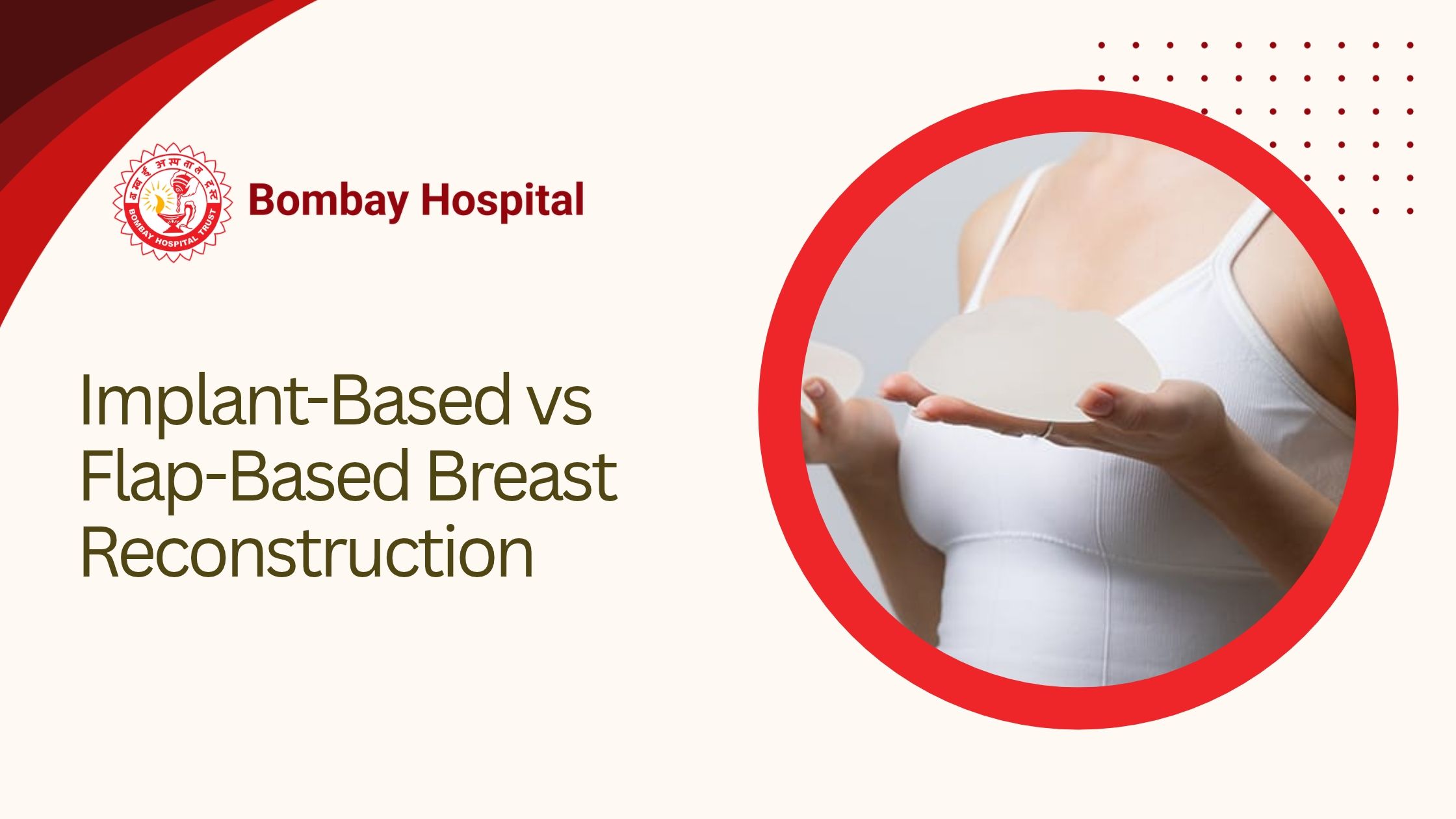
Breast cancer treatment can involve a mastectomy, during which part or all of the breast tissue is removed. Although this surgery is often an important part of treatment, changes in breast shape and appearance can affect a woman's physical confidence and emotional well-being.
Breast reconstruction is a surgical option that helps restore the shape and appearance of the breast after mastectomy or certain other breast surgeries. Two commonly used approaches are implant-based reconstruction and flap-based reconstruction.
Implant-based reconstruction uses a silicone or saline implant to create a breast shape, whereas flap-based reconstruction uses tissue taken from another part of the patient's body, such as the abdomen, back or thigh.
Both approaches have advantages and limitations. The right choice depends on the patient's health, body structure, cancer treatment plan, personal preferences and reconstructive goals.
If you are exploring Breast Reconstruction in Jaipur, this guide explains how implant-based and flap-based procedures differ, their benefits, risks, recovery and the factors to consider before choosing a treatment.
What Is Breast Reconstruction?
Breast reconstruction is a surgical procedure that aims to restore the shape, contour and symmetry of the breast following mastectomy or selected breast cancer surgeries.
It may be performed:
- At the same time as mastectomy (immediate reconstruction).
- After completing cancer treatment (delayed reconstruction).
- In stages, depending on the patient's treatment plan and surgical requirements.
Breast reconstruction is a personal choice. Some women prefer reconstruction, while others choose to remain without reconstruction or use an external breast prosthesis.
The decision should be made after discussing available options with the breast cancer treatment team and a qualified plastic and reconstructive surgeon.
What Is Implant-Based Breast Reconstruction?
Implant-based breast reconstruction uses a medical-grade breast implant to recreate the breast mound after breast tissue has been removed.
The implant is generally filled with silicone gel or saline. The surgeon places it beneath the chest skin, with positioning depending on the patient's anatomy and the surgical technique.
This approach may be suitable for women who have sufficient healthy tissue to cover and support an implant.
How Is Implant-Based Reconstruction Performed?
There are two commonly used approaches.
Tissue Expander-Based Reconstruction
This method is performed in stages.
- During the initial surgery, the surgeon places a temporary tissue expander beneath the chest skin or muscle.
- The expander is gradually filled over multiple visits to stretch the surrounding tissue.
- Once the desired expansion is achieved, another procedure may be performed to replace the expander with a permanent breast implant.
The number and timing of procedures depend on the treatment plan and the patient's healing.
Direct-to-Implant Reconstruction
In selected patients, a permanent breast implant may be placed during the mastectomy operation itself.
This approach may be considered when the patient's anatomy, remaining skin and tissue quality, cancer treatment plan and surgical findings are suitable.
Not everyone is a candidate for direct-to-implant reconstruction.
Benefits of Implant-Based Reconstruction
Some potential advantages include:
- Generally shorter and less complex surgery than many flap procedures.
- No need to transfer tissue from another body area.
- Usually a shorter initial recovery period.
- No additional donor-site scar.
- May be suitable for patients who prefer implant-based reconstruction.
- Can sometimes be performed at the same time as mastectomy.
Limitations of Implant-Based Reconstruction
Implant reconstruction also has certain limitations:
- Implants do not last forever and may require future replacement or removal.
- Additional procedures may be needed to improve breast shape or symmetry.
- Capsular contracture, where scar tissue tightens around the implant, may occur.
- Implant rupture, infection or implant displacement can require further treatment.
- Previous or planned radiation therapy may increase the risk of complications.
- The reconstructed breast may feel different from natural breast tissue.
Patients should also discuss implant-specific safety information, including the rare risk of breast implant-associated anaplastic large cell lymphoma (BIA-ALCL), which is primarily associated with certain textured implants.
What Is Flap-Based Breast Reconstruction?
Flap-based breast reconstruction, also called autologous breast reconstruction, uses the patient's own tissue to recreate the breast.
The tissue usually includes skin, fat and, depending on the technique, muscle. It is taken from another part of the body and transferred to the chest to form a new breast mound.
Common donor areas include:
- Lower abdomen
- Back
- Inner or upper thigh
- Buttock region
Flap reconstruction may be considered for women who prefer not to have implants, have insufficient chest tissue for implant coverage or have undergone radiation therapy that has affected the chest tissues.
How Is Flap-Based Reconstruction Performed?
The surgeon selects a suitable donor area and transfers the required tissue to the chest.
Some flaps remain connected to their original blood supply and are moved through a passage under the skin. Others are completely detached and transferred to the chest, where the surgeon reconnects the blood vessels using microsurgical techniques.
The procedure depends on the type of flap selected and the patient's anatomy.
Common Types of Flap-Based Reconstruction
DIEP Flap Reconstruction
DIEP stands for Deep Inferior Epigastric Perforator flap.
This technique uses skin and fat from the lower abdomen while preserving the abdominal muscles. The transferred tissue is connected to blood vessels in the chest using microsurgery.
It may be suitable for patients who have sufficient abdominal tissue and appropriate blood vessel anatomy.
TRAM Flap Reconstruction
TRAM stands for Transverse Rectus Abdominis Myocutaneous flap.
This technique uses skin, fat and some abdominal muscle tissue to reconstruct the breast. Depending on the method, the tissue may remain connected to its original blood supply or be transferred using microsurgery.
The amount of muscle involved varies with the specific TRAM technique.
Latissimus Dorsi Flap Reconstruction
This approach uses muscle and sometimes skin and fat from the upper back. The tissue is moved towards the chest while remaining connected to its original blood supply.
In some patients, it may be combined with a breast implant to achieve the desired breast volume.
Thigh-Based Flap Reconstruction
For selected patients who do not have enough suitable abdominal tissue, tissue from the thigh may be considered.
Examples include TUG and PAP flap techniques. The choice depends on body anatomy, available tissue and the surgeon's assessment.
Benefits of Flap-Based Reconstruction
Potential advantages include:
- Uses the patient's own tissue rather than relying entirely on an implant.
- Can provide a softer and more natural-feeling breast mound.
- May be suitable for selected patients who have received chest radiation.
- Does not involve a permanent breast implant when performed as a flap-only procedure.
- The reconstructed breast generally changes with natural weight fluctuations and ageing.
- May provide an opportunity to improve contour at the donor area.
Limitations of Flap-Based Reconstruction
Flap procedures also involve important considerations:
- Surgery is generally longer and more complex.
- Recovery is usually longer than implant-based reconstruction.
- An additional surgical site is created where tissue is taken.
- Scarring occurs at both the breast and donor areas.
- Donor-site complications, such as abdominal weakness or bulging, may occur depending on the technique.
- Blood flow problems can affect the transferred tissue.
- In rare cases, partial or complete flap loss may occur.
- Microsurgical procedures require specialised surgical expertise and postoperative monitoring.
Implant-Based vs Flap-Based Breast Reconstruction: Key Differences
Both procedures aim to restore breast shape, but they differ in how the reconstructed breast is created.
| Comparison | Implant-Based Reconstruction | Flap-Based Reconstruction |
|---|---|---|
| Tissue used | Silicone or saline implant | Patient's own skin, fat and sometimes muscle |
| Donor site | Not required | Required |
| Surgical complexity | Generally less complex | Generally more complex |
| Surgery duration | Usually shorter | Usually longer |
| Initial recovery | Generally shorter | Generally longer |
| Scarring | Primarily around the reconstructed breast | Breast and donor-site scars |
| Feel | May feel different from natural tissue | Often feels softer and more natural |
| Radiation considerations | Radiation may increase complication risks | May be considered when chest tissue has been affected by radiation |
| Long-term maintenance | Implant monitoring and possible future surgery | Flap itself does not require implant replacement |
| Additional procedures | May be needed for implant revision or symmetry | May be needed for contour refinement or symmetry |
Neither method is suitable for everyone. A reconstructive surgeon evaluates the patient's overall condition before recommending an approach.
Which Breast Reconstruction Method Is Better After Mastectomy?
There is no universally better method. The decision depends on several medical and personal factors.
Previous or Planned Radiation Therapy
Radiation therapy can affect the skin and tissues around the chest, potentially increasing the risk of healing problems and implant-related complications.
For some patients, flap-based reconstruction may be considered because it brings healthy tissue and its blood supply to the chest.
However, reconstruction timing and technique must be planned carefully with the cancer treatment team.
Body Structure and Available Tissue
Implant-based reconstruction may be suitable for patients with sufficient tissue to cover and support an implant.
Flap-based reconstruction requires an appropriate donor area with enough tissue and suitable blood supply. The abdomen is a common donor area, but other options may be considered.
Overall Health
Medical conditions such as diabetes, obesity and vascular problems can influence surgical risks and healing.
Smoking can also increase the likelihood of complications. Patients should discuss their health history and medications before surgery.
Personal Preference
Some women prefer implants because they do not want tissue taken from another body area. Others prefer using their own tissue and wish to avoid a permanent implant.
Understanding the advantages and limitations of both approaches helps patients make an informed choice.
Expected Recovery and Future Procedures
Implant-based reconstruction often involves a shorter initial recovery, although future implant-related procedures may be necessary.
Flap-based reconstruction generally involves a more demanding initial recovery, but the transferred tissue does not require routine replacement like an implant.
Your surgeon should explain the likely number of operations, hospital stay and follow-up requirements for each option.
Can Breast Reconstruction Be Performed Immediately After Mastectomy?
Yes. Breast reconstruction can sometimes be performed during the same operation as mastectomy. This is known as immediate breast reconstruction.
However, immediate reconstruction is not suitable for every patient.
Some women may benefit from delayed reconstruction, particularly when additional cancer treatment, such as radiation therapy, is planned or when medical conditions need to be addressed first.
Both implant-based and flap-based reconstruction can be performed immediately or at a later stage, depending on the clinical situation.
The timing should be coordinated between the breast surgeon, plastic surgeon, oncologist and radiation oncologist.
What Is the Recovery Period After Breast Reconstruction?
Recovery depends on the type of reconstruction, the extent of surgery and the patient's general health.
Recovery After Implant-Based Reconstruction
Patients may experience swelling, bruising, tightness and discomfort around the chest area.
If a tissue expander is used, additional appointments may be needed for gradual expansion before the permanent implant is placed.
Most patients recover more quickly than after complex flap reconstruction, but restrictions on lifting, exercise and arm movements may apply during the initial healing period.
Recovery After Flap-Based Reconstruction
Recovery generally takes longer because surgery involves both the breast and the donor area.
Patients may experience:
- Swelling and bruising
- Discomfort at the chest and donor site
- Temporary weakness or restricted movement
- Drainage tubes to remove excess fluid
- Fatigue during the initial recovery period
After microsurgical free-flap reconstruction, the transferred tissue is monitored closely in the hospital to ensure that its blood supply remains adequate.
Patients should follow instructions regarding wound care, movement, physical activity and follow-up appointments.
Does Breast Reconstruction Affect Breast Cancer Treatment or Recurrence?
Breast reconstruction is intended to restore breast shape and does not replace cancer treatment.
The decision to undergo reconstruction should be coordinated with the oncology team so that it does not interfere with necessary treatment.
Breast reconstruction itself does not increase the risk of breast cancer recurrence. However, patients still need appropriate cancer surveillance and follow-up according to their oncologist's recommendations.
Reconstruction can also affect how the chest area is examined, so it is important to attend scheduled follow-up appointments and report any new lumps, swelling or unusual changes.
What Are the Risks of Breast Reconstruction?
Both implant-based and flap-based procedures carry surgical risks.
Common potential complications include:
- Bleeding or infection
- Fluid accumulation around the surgical area
- Delayed wound healing
- Scarring
- Changes in sensation
- Breast asymmetry
- Anaesthesia-related complications
Implant-specific complications may include capsular contracture, rupture, displacement and the need for future implant-related surgery.
Flap-specific complications may include problems with blood supply, partial or complete flap loss and weakness or changes in shape at the donor site.
Your surgeon will explain the risks associated with the recommended procedure and your individual health profile.
How to Prepare for Breast Reconstruction Surgery
Preparation is an important part of the reconstructive process.
Before surgery, you may be advised to:
Discuss your cancer treatment history and future treatment plan with your medical team.
Share details of previous surgeries, medications and existing medical conditions.
Stop smoking well in advance, as advised by your surgeon.
Complete recommended blood tests, imaging and medical assessments.
Understand the surgical technique, possible complications and expected recovery.
Arrange support at home during the initial recovery period.
Discuss expectations regarding breast size, symmetry, scars and sensation.
Taking time to understand the procedure can help you feel more prepared and confident about the decision.
Frequently Asked Questions
Neither method is universally better. Implant-based reconstruction may involve a shorter initial recovery, while flap-based reconstruction uses the patient's own tissue and may provide a more natural feel. The choice depends on medical suitability, cancer treatment history, body structure and personal preference.
Yes. Immediate reconstruction may be possible during the same operation as mastectomy. However, some patients may need or prefer delayed reconstruction depending on their cancer treatment plan, health and personal circumstances.
Many flap procedures use skin and fat from the lower abdomen. DIEP flap reconstruction uses abdominal skin and fat while preserving the abdominal muscles. Other techniques may use tissue from the back, thighs or buttocks.
Breast implants are not lifetime devices. Some patients may need additional surgery to replace or remove an implant because of complications, changes in preference or other reasons. Regular follow-up and appropriate implant monitoring are important.
Yes. Reconstruction may be possible after radiation therapy. However, radiation can affect the quality of chest tissues and increase the risk of certain complications. Flap-based reconstruction may be considered in selected patients, depending on their condition and treatment history.
Not necessarily. Mastectomy can damage nerves responsible for breast sensation. Some sensation may return over time, but normal sensation is not guaranteed after either implant-based or flap-based reconstruction.
Yes. Delayed breast reconstruction can be performed months or even years after mastectomy, provided the patient is medically suitable. The reconstructive options depend on previous treatment, tissue condition and overall health.
Making an Informed Decision About Breast Reconstruction
Breast reconstruction is a personal decision, and there is no single approach that is right for every woman. Implant-based reconstruction may offer a less complex initial procedure and shorter recovery, while flap-based reconstruction uses the patient's own tissue and may provide a more natural feel.
If you are considering Breast Reconstruction in Jaipur after mastectomy or breast cancer surgery, consult the plastic and reconstructive surgery team at Bombay Hospital Jaipur. Discuss your medical history, cancer treatment plan, available surgical options, expected recovery and long-term considerations before deciding on a procedure.
A personalised assessment and coordinated care can help you choose a reconstructive approach that aligns with your health needs and expectations.
Book an Appointment