
 Cardiology
 Cardiovascular Thoracic Surgery
 Endocrinology
 Neurology
 Neuro Surgery
 Nephrology
 Urology
 Gastroenterology
 Pulmonology
 Plastic Surgery
 Nuclear Medicine
 Anesthesiology
 Transfusion Medicine
 Medical Oncology
 Surgical Oncology
 Radiation Oncology
 Critical Care Medicine
 ENT
 General Medicine
 General Surgery
 Gynaecology & Obstetrics
 Ophthalmology
 Orthopaedics
 Paediatrics and Neonatology
 Spine Surgery
 Cathlab
 MRI
(3.0 Tesla)
 CT
Scan (128 Slice)
 2D Echo
 TMT
 PFT
 EEG
 EMG
& NCS
 Audiometry
 Flexible Laryngoscopy
 Endoscopy
& Colonoscopy
 Bronchoscopy
 Allergy Testing (Skin Prick Test-SPT)
 Microbiology
 Pathology
 Radio-diagnosis
 Radiation Therapy
 Physiotherapy
 Radiology
 Pharmacy
 AKU
Dialysis
 Emergency Service
 Executive
Health Checkup
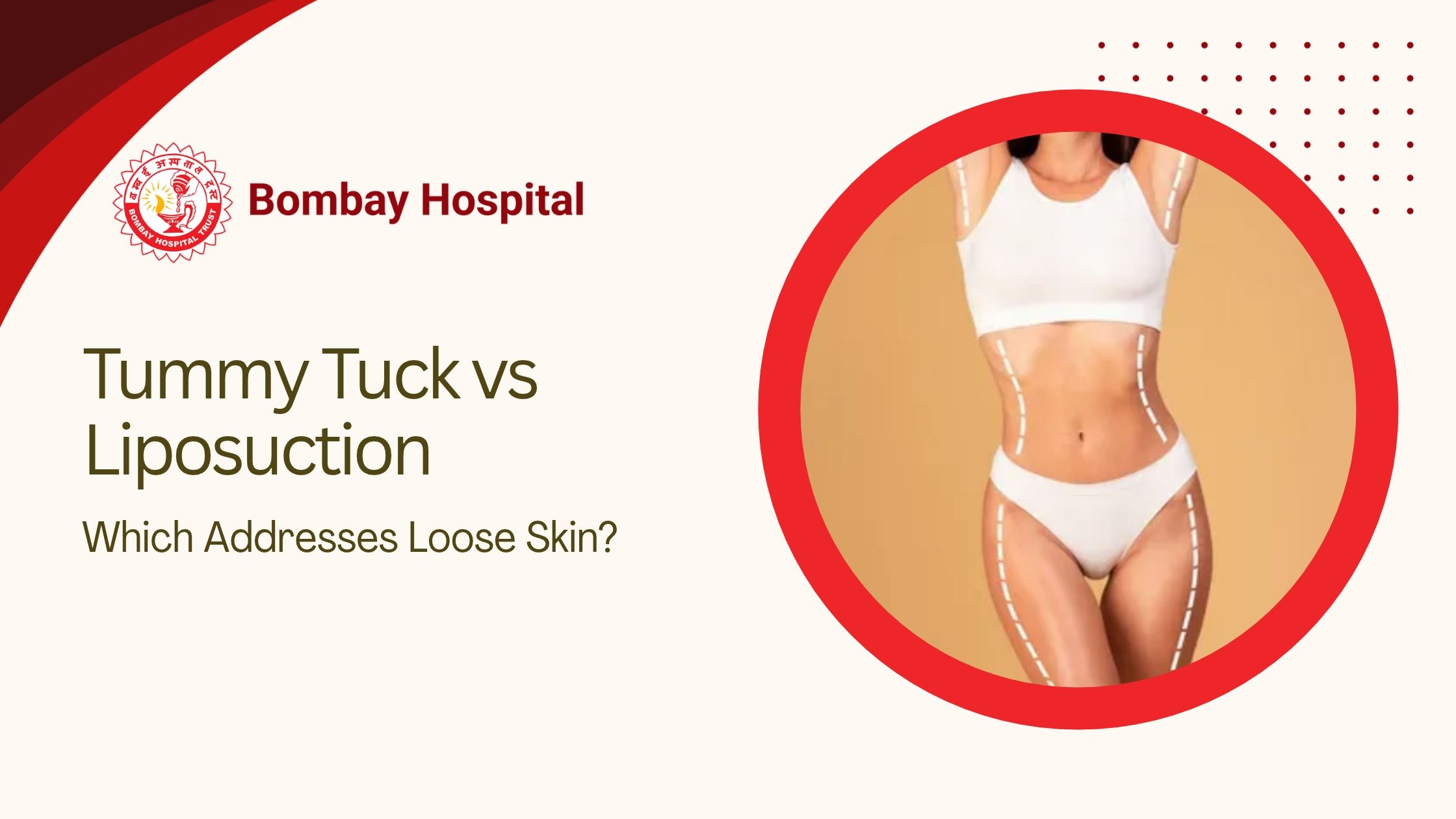
Loose skin around the abdomen can develop after pregnancy, significant weight loss, ageing or changes in skin elasticity. For some people, the concern is not just excess skin but also stubborn fat deposits or weakened abdominal muscles that create a protruding tummy.
Two surgical procedures commonly discussed for abdominal contouring are tummy tuck surgery and liposuction. Although both can change the appearance of the abdomen, they address different concerns.
A tummy tuck removes excess skin and may tighten separated abdominal muscles, while liposuction primarily removes localised fat beneath the skin. Understanding this difference is important when deciding which procedure may suit your needs.
If you are considering Tummy Tuck in Jaipur or Liposuction in Jaipur, this guide explains how the procedures work, who may benefit from each, and what to discuss with a qualified plastic surgeon before making a decision.
What Is a Tummy Tuck?
A tummy tuck, medically known as abdominoplasty, is a surgical procedure designed to improve abdominal contour by removing excess skin and, when appropriate, tightening weakened or separated abdominal muscles.
It is often considered by people who have loose abdominal skin that does not improve sufficiently after weight stabilisation and lifestyle changes.
Common reasons people consider a tummy tuck include:
- Loose skin following pregnancy
- Excess abdominal skin after significant weight loss
- A hanging fold of skin around the lower abdomen
- Abdominal muscle separation after pregnancy
- Stretch marks located on skin that may be removed during surgery
- A persistent abdominal bulge associated with excess skin and muscle laxity
The procedure typically involves an incision across the lower abdomen. The surgeon removes selected excess skin and may repair separated abdominal muscles when indicated. In a full tummy tuck, the belly button may also need to be repositioned.
A tummy tuck is a body-contouring procedure, not a substitute for weight-loss treatment. It is generally considered when a patient's weight is reasonably stable and their health is suitable for surgery.
What Is Liposuction?
Liposuction is a surgical procedure that removes localised deposits of fat from beneath the skin. It is intended to reshape selected areas rather than treat significant loose skin or provide overall weight loss.
For the abdomen, liposuction may be considered when stubborn fat creates fullness around the stomach or waist despite consistent lifestyle habits.
Common treatment areas include:
- Upper abdomen
- Lower abdomen
- Waist and flanks
- Areas of localised fat around the torso
During the procedure, the surgeon makes small incisions and inserts a thin tube called a cannula to remove fat.
Liposuction generally works best when the skin has sufficient elasticity to adapt to the new contours after fat removal. If the skin is significantly loose, removing the underlying fat may leave the skin looking more lax or uneven. American Society of Plastic Surgeons: Liposuction
Tummy Tuck vs Liposuction: What Is the Main Difference?
The main difference is the type of tissue each procedure addresses.
| Feature | Tummy Tuck | Liposuction |
|---|---|---|
| Primary purpose | Remove excess skin and improve abdominal contour | Remove localised fat deposits |
| Loose skin | Removes selected excess skin | Does not reliably remove significant loose skin |
| Abdominal muscles | May repair separated muscles | Does not repair separated abdominal muscles |
| Incisions | Usually a longer lower-abdominal incision | Usually several small incisions |
| Scarring | Generally more extensive, including a lower-abdominal scar | Usually smaller scars |
| Common consideration | Loose skin after pregnancy or major weight loss | Localised fat with reasonably firm skin |
| Recovery | Generally more involved | Depends on the area treated and extent of surgery |
| Weight loss | Not a weight-loss procedure | Not a weight-loss procedure |
Neither procedure is universally suitable for everyone. The choice depends on whether the main concern is excess skin, localised fat, muscle separation or a combination of these issues.
Which Procedure Is Better for Loose Abdominal Skin?
If loose skin is your main concern, a tummy tuck is generally the procedure designed to address it.
After pregnancy or significant weight loss, the skin may stretch beyond its ability to return to its previous shape. This can leave a fold of excess tissue, particularly in the lower abdomen.
Liposuction removes fat but does not cut away this extra skin. Although some skin may contract after liposuction, the amount of contraction varies and cannot be guaranteed.
A tummy tuck allows the surgeon to remove selected excess skin and reshape the remaining abdominal tissue.
When a Tummy Tuck May Be Considered
A surgeon may discuss a tummy tuck if you have:
- A noticeable fold of loose skin
- Skin hanging over the lower abdomen
- Significant skin laxity after weight loss
- Loose abdominal tissue following pregnancy
- Abdominal muscle separation that contributes to a bulging appearance
The procedure leaves a scar, usually along the lower abdomen. The length and position depend on the amount of skin removed and the surgical technique.
A consultation is necessary to determine whether the expected benefits justify the operation and its recovery requirements.
When Is Liposuction More Appropriate?
Liposuction may be considered when the main concern is stubborn fat rather than loose skin.
For example, someone may be close to their desired weight but still have localised fat deposits around the abdomen or waist. If the overlying skin has good elasticity and there is no significant muscle separation, liposuction may be an option.
Liposuction May Be Considered When:
- The main concern is localised abdominal fat.
- The skin is reasonably firm and elastic.
- There is little excess skin.
- The patient's weight is stable.
- The goal is to improve body contours rather than achieve major weight loss.
Liposuction does not remove fat surrounding internal organs, known as visceral fat. It also cannot reliably correct significant skin laxity or separated abdominal muscles.
For these reasons, a person with a protruding abdomen may need an assessment to establish whether the appearance is caused by subcutaneous fat, visceral fat, loose skin, muscle separation or a combination of factors.
How Pregnancy Can Affect Your Choice
Pregnancy can change the abdominal area in several ways. The skin stretches as the abdomen expands, and the abdominal muscles may separate. Some people also develop localised fat deposits that remain after childbirth.
These changes do not affect everyone in the same way.
If You Have Loose Skin After Pregnancy
If the main concern is hanging skin or a loose lower-abdominal fold, a tummy tuck may be discussed.
If You Have Stubborn Fat but Firm Skin
If the skin has good elasticity and there is little excess skin, liposuction may be considered for selected fat deposits.
If You Have Both Loose Skin and Excess Fat
Some patients may benefit from a combination of tummy tuck and liposuction, depending on their health, anatomy and surgical goals.
People considering surgery after pregnancy are generally advised to wait until they have recovered, their weight has stabilised and they have discussed future pregnancy plans with their surgeon. A subsequent pregnancy can affect the results of abdominal contouring surgery.
Loose Skin After Major Weight Loss: Which Procedure Helps?
Significant weight loss can leave excess skin around the abdomen, flanks and other parts of the body.
When the skin has been stretched for a prolonged period, it may not contract sufficiently after the underlying fat decreases.
In this situation, liposuction alone may not address the primary concern.
A tummy tuck may be considered when excess abdominal skin is substantial. If loose skin extends around the sides of the waist or lower back, the surgeon may discuss other body-contouring procedures.
Before surgery, it is important to maintain a stable weight and address nutritional or medical issues that could affect healing. The timing and extent of surgery should be individualised.
Can a Tummy Tuck and Liposuction Be Combined?
Yes, some patients may be suitable for a combined procedure called lipoabdominoplasty, which involves tummy tuck surgery and liposuction.
The combination can address different aspects of abdominal contour:
- Tummy tuck: Removes excess skin and may repair separated abdominal muscles.
- Liposuction: Reduces selected fat deposits to refine the abdominal or waist contours.
However, combining procedures is not appropriate for every patient. The extent of surgery, overall health, blood supply to the skin and potential complications must be carefully considered.
In some cases, the surgeon may recommend performing procedures separately rather than during one operation.
The decision should be based on a physical examination, the patient's medical history and an assessment of the risks and expected benefits.
What Happens During a Consultation?
If you are considering Tummy Tuck in Jaipur or Liposuction in Jaipur, a consultation with a qualified plastic surgeon is an important first step.
The surgeon may assess:
Skin elasticity:
Whether your skin is likely to adapt after fat removal.
Fat distribution:
Where the excess fat is located and whether it is beneath the skin or associated with deeper abdominal fullness.
Abdominal muscles:
Whether muscle separation contributes to the appearance of the abdomen.
Medical history:
Previous surgeries, existing health conditions, medications and factors that could affect recovery.
Weight stability:
Whether you are near a sustainable weight and whether further major weight changes are expected.
Personal goals:
Which concerns matter most to you and what changes may realistically be achieved.
Based on this assessment, the surgeon can explain whether liposuction, a tummy tuck, a combination of procedures or a non-surgical approach is more appropriate.
Recovery After a Tummy Tuck vs Liposuction
Recovery differs because the procedures involve different amounts of tissue removal and surgical work.
Tummy Tuck Recovery
Recovery after a tummy tuck is generally more involved. Patients may experience swelling, bruising, discomfort and temporary difficulty standing fully upright.
Depending on the procedure, recovery may involve:
- Wearing a compression garment
- Caring for surgical incisions
- Managing discomfort with prescribed medication
- Temporarily limiting lifting and strenuous activity
- Attending follow-up appointments
- Gradually returning to everyday activities
Some patients require several weeks before resuming work or more demanding activities. The timeline depends on the extent of surgery, the patient's health and the nature of their work.
Liposuction Recovery
Recovery after liposuction varies according to the treatment area and amount of fat removed.
Common temporary effects include swelling, bruising, tenderness and changes in sensation. A compression garment may be recommended to support healing.
Some patients return to routine activities relatively quickly, while others require more time, especially after extensive treatment.
In both cases, follow your surgeon's instructions regarding wound care, medication, movement and exercise. Do not compare your recovery directly with another person's experience.
Risks and Considerations
Both tummy tuck surgery and liposuction carry potential risks. These may include bleeding, infection, fluid accumulation, changes in sensation, uneven contours, scarring, blood clots and complications related to anaesthesia.
A tummy tuck generally involves a longer incision and more extensive tissue removal. Possible complications include wound-healing problems, prominent scarring, fluid accumulation and changes in skin sensation.
Liposuction may cause uneven contours, persistent swelling, numbness or irregularities in the treated area. It does not guarantee perfectly smooth skin.
The risk profile varies with the procedure, the patient's health, the extent of surgery and the surgeon's assessment. Discuss the potential complications, expected results and possibility of further surgery before making a decision.
How to Prepare for Body Contouring Surgery
If surgery is being considered, the following steps may help you prepare:
- Aim for a stable weight before surgery.
- Share your complete medical history and medication list.
- Inform your surgeon about smoking or nicotine use.
- Follow instructions regarding medicines and supplements.
- Ask about the expected scar and recovery period.
- Arrange help at home during the initial recovery period.
- Understand when you can return to work, driving and exercise.
- Discuss future pregnancy plans or anticipated weight changes.
Do not stop prescribed medicines or start supplements without medical advice. Your surgical team will provide instructions tailored to your circumstances.
Frequently Asked Questions
Liposuction primarily removes localised fat and does not reliably remove significant loose skin. If excess skin is the main concern, a tummy tuck or another skin-removal procedure may be discussed.
No. A tummy tuck is intended to remove excess skin and improve abdominal contour. It may also involve tightening separated abdominal muscles. It is not a substitute for weight management.
No. Liposuction removes fat beneath the skin but does not repair separated abdominal muscles. Muscle repair may be considered as part of a tummy tuck when clinically appropriate.
Some patients may be suitable for both procedures during one operation. The decision depends on the patient's health, anatomy, the amount of treatment required and the overall surgical risk.
A tummy tuck generally leaves a longer scar across the lower abdomen because excess skin must be removed. Liposuction usually involves several small incision scars. Scar appearance varies between individuals.
A qualified plastic surgeon can assess your skin, fat distribution, abdominal muscles and overall health. The recommendation depends on the specific cause of the abdominal concern and your treatment goals.
Conclusion
Tummy tuck surgery and liposuction serve different purposes in abdominal contouring. A tummy tuck is designed to remove excess skin and may tighten separated abdominal muscles, while liposuction primarily removes localised fat deposits.
If loose skin is your main concern, Tummy Tuck in Jaipur may be worth discussing with a qualified plastic surgeon. If you have localised fat and reasonably elastic skin, Liposuction in Jaipur may be an option. Some patients may benefit from a combination, while others may not need surgery.
At Bombay Hospital Jaipur, patients can seek specialist guidance to understand their options and determine which approach may be appropriate for their individual needs. A personalised consultation is the best way to discuss potential benefits, risks, scars and recovery before deciding on treatment.
Book an Appointment