 Cardiology
 Cardiovascular Thoracic Surgery
 Endocrinology
 Neurology
 Neuro Surgery
 Nephrology
 Urology
 Gastroenterology
 Pulmonology
  Plastic Surgery
 Nuclear Medicine
  Anesthesiology
  Transfusion Medicine
  Medical Oncology
  Surgical Oncology
  Radiation Oncology
  Critical Care Medicine
  ENT
ENT General Medicine
 General Surgery
 Gynaecology & Obstetrics
 Ophthalmology
 Orthopaedics
 Paediatrics and Neonatology
  Spine Surgery
 Cathlab
 MRI
(3.0 Tesla)
MRI
(3.0 Tesla) CT
Scan (128 Slice)
CT
Scan (128 Slice) 2D Echo
 TMT
TMT PFT
PFT EEG
EEG EMG
& NCS
EMG
& NCS Audiometry
 Flexible Laryngoscopy
 Endoscopy
& Colonoscopy
Endoscopy
& Colonoscopy Bronchoscopy
 Allergy Testing (Skin Prick Test-SPT)
 Microbiology
 Pathology
 Radio-diagnosis
 Radiation Therapy
 Physiotherapy
 Radiology
 Pharmacy
 AKU
Dialysis
AKU
Dialysis  Emergency Service
 Executive
Health Checkup
Executive
Health CheckupDr. Dhiraj Agarwal
MBBS, MS
General Surgeon


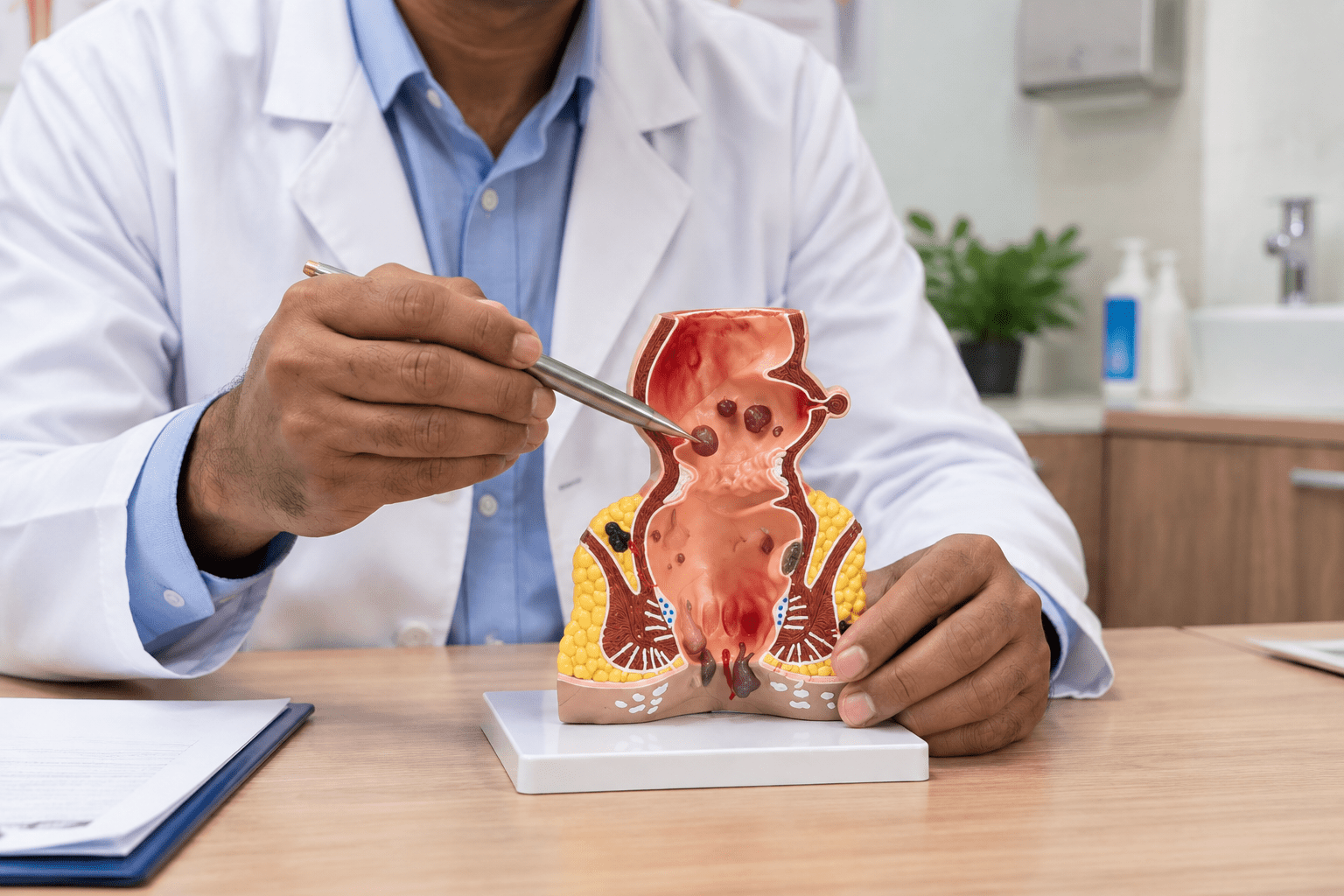
Anal fissures and fistulas are common anorectal conditions that can cause pain, bleeding, swelling, discharge and significant discomfort during daily activities. While mild fissures may improve with medicines and lifestyle changes, persistent or complicated cases may require a surgical procedure.
At Bombay Hospital Jaipur, the Department of Laparoscopic General and GI Surgery provides diagnosis and surgical management for anorectal conditions, including fistulas. The department also offers laser surgery for conditions such as fistulas and piles, supported by modern surgical infrastructure.
An anal fissure is a small tear in the lining of the anus. It commonly develops after passing hard or large stools, prolonged constipation or repeated straining during bowel movements.
Common Symptoms
Acute fissures may heal with appropriate treatment. However, recurrent or chronic fissures may need specialist evaluation.
An anal fistula is an abnormal tunnel that develops between the anal canal and the skin around the anus. It often develops following an infection or abscess near the anus.
Symptoms May Include:
Unlike many simple fissures, an established fistula often does not heal permanently without appropriate treatment.
Although their names sound similar, fissures and fistulas are different conditions.
| Anal Fissure | Anal Fistula |
|---|---|
| A tear in the anal lining | An abnormal tunnel between the anal canal and skin |
| Often associated with constipation and hard stools | Frequently develops after an anal abscess or infection |
| Pain and bleeding are common | Discharge, swelling and recurrent infection may occur |
| Many acute cases respond to conservative treatment | Persistent fistulas often require surgical treatment |
A proper examination is important because treatment depends on the underlying condition.
A surgeon may evaluate your symptoms, medical history and the affected area through a physical examination. Depending on the complexity of the condition, additional investigations may be recommended to understand the fistula tract or rule out other problems.
Early evaluation can help prevent recurring symptoms and complications.
Treatment is selected according to the type, severity and duration of the condition.
Initial treatment may include:
Chronic fissures that do not respond to conservative treatment may require a procedure or surgery.
Fistula treatment generally focuses on eliminating the abnormal tract while protecting normal anal sphincter function. Depending on the fistula's location and complexity, the surgeon may recommend an appropriate surgical approach.
Bombay Hospital Jaipur's General Surgery department lists laser surgery for fistulas and has modern laser surgical equipment as part of its infrastructure.
Laser-based techniques can be used in selected fistula cases. The suitability of laser treatment depends on factors such as the fistula tract, its complexity and its relationship with the anal sphincter.
The surgeon evaluates the condition before recommending the most appropriate technique rather than using the same procedure for every patient.
Your treatment journey may include:
Recovery varies depending on the treatment and complexity of the condition. Patients may be advised to maintain good hydration, consume adequate fibre and prevent constipation. Keeping the treated area clean and following wound-care instructions can also support recovery.
Your surgeon will advise when you can resume exercise, heavy lifting and other activities.
Bombay Hospital Jaipur's General Surgery department is supported by advanced operation theatres, modern laser surgery equipment, an ICG laparoscopic camera, high-resolution imaging, an in-house endoscopy suite, monitored recovery rooms and a fully equipped ICU.
This infrastructure allows patients requiring surgical care to receive diagnosis, treatment and postoperative monitoring within a tertiary-care hospital environment.
Consult a surgeon if you experience persistent anal pain, recurrent bleeding, pus or discharge, swelling near the anus, repeated abscesses or symptoms that do not improve with home measures.
Severe pain with fever, rapidly increasing swelling or significant bleeding warrants prompt medical attention.
Yes. Many acute fissures improve with dietary changes, stool management, medicines and other conservative measures. Chronic fissures may require a procedure if they do not respond adequately.
An established fistula often requires a procedure for definitive treatment, but the recommended approach depends on its anatomy and complexity.
No. Laser treatment is appropriate only for selected cases. Your surgeon will assess the fistula before recommending the treatment.
Recurrence is possible, particularly with chronic constipation, persistent risk factors or complex fistulas. Following postoperative and bowel-management advice can help support recovery.
A general surgeon with experience in anorectal and gastrointestinal conditions can evaluate and treat these problems.
Don't ignore persistent anal pain, bleeding, swelling or discharge. Bombay Hospital Jaipur offers comprehensive surgical evaluation and personalised treatment for fissures and fistulas, including laser surgery for selected fistula cases.
Book a consultation with the General Surgery team to understand the cause of your symptoms and discuss the right treatment option for you.

MBBS, MS
General Surgeon
 Book an Appointment