 Cardiology
 Cardiovascular Thoracic Surgery
 Endocrinology
 Neurology
 Neuro Surgery
 Nephrology
 Urology
 Gastroenterology
 Pulmonology
  Plastic Surgery
 Nuclear Medicine
  Anesthesiology
  Transfusion Medicine
  Medical Oncology
  Surgical Oncology
  Radiation Oncology
  Critical Care Medicine
  ENT
ENT General Medicine
 General Surgery
 Gynaecology & Obstetrics
 Ophthalmology
 Orthopaedics
 Paediatrics and Neonatology
  Spine Surgery
 Cathlab
 MRI
(3.0 Tesla)
MRI
(3.0 Tesla) CT
Scan (128 Slice)
CT
Scan (128 Slice) 2D Echo
 TMT
TMT PFT
PFT EEG
EEG EMG
& NCS
EMG
& NCS Audiometry
 Flexible Laryngoscopy
 Endoscopy
& Colonoscopy
Endoscopy
& Colonoscopy Bronchoscopy
 Allergy Testing (Skin Prick Test-SPT)
 Microbiology
 Pathology
 Radio-diagnosis
 Radiation Therapy
 Physiotherapy
 Radiology
 Pharmacy
 AKU
Dialysis
AKU
Dialysis  Emergency Service
 Executive
Health Checkup
Executive
Health CheckupDr. Dhiraj Agarwal
MBBS, MS
General Surgeon


A hernia develops when an internal organ or tissue pushes through a weakened area in the surrounding muscle or connective tissue. It may appear as a visible bulge and can cause pain, heaviness, discomfort or difficulty with everyday activities.
While some small hernias may initially be monitored, a hernia generally does not repair itself permanently. As it grows or becomes symptomatic, surgical treatment may be recommended to strengthen the weakened area and prevent complications.
At Bombay Hospital Jaipur, the Department of Laparoscopic General and GI Surgery provides surgical care for common types of hernias, including inguinal, umbilical and incisional hernias. The department uses minimally invasive surgical approaches where appropriate, supported by advanced operating theatres, laparoscopic technology, diagnostic imaging and monitored postoperative care.
The right treatment depends on the type, location and size of the hernia, your symptoms, overall health and previous surgical history.
A hernia occurs when part of an internal organ or tissue pushes through a weak point in the muscle or connective tissue that normally holds it in place.
Hernias most commonly occur in the abdominal wall. For example, a portion of the intestine or abdominal tissue may push through a weakened area and create a noticeable swelling.
A hernia may be:
Not every hernia causes immediate symptoms. However, an enlarging or painful hernia should be evaluated by a surgeon rather than ignored.
Hernias are classified according to where they occur. The most common types include:
1. Inguinal Hernia
An inguinal hernia develops in the groin and is particularly common in men. It may appear as a swelling in the groin or extend towards the scrotum.
Symptoms may become more noticeable while:
2. Umbilical Hernia
An umbilical hernia develops around the belly button. It can occur in adults as well as children and may become more prominent when coughing or straining.
Adult umbilical hernias may gradually increase in size and sometimes require surgical repair.
3. Incisional Hernia
An incisional hernia develops through or near a previous surgical incision. The abdominal wall may remain weak after surgery, allowing tissue to push through the area.
Bombay Hospital Jaipur specifically lists inguinal, umbilical and incisional hernia treatment among the services of its General Surgery department.
A hernia usually develops because of a combination of muscle weakness and increased pressure inside the abdomen.
Factors that may contribute include:
Some hernias may be present from birth, while others develop gradually over time.
The most noticeable sign of a hernia is often a bulge or swelling in the abdomen or groin.
Other symptoms can include:
Some people may have very few symptoms despite having a relatively large hernia.
Sudden or severe pain associated with a hernia should not be ignored, particularly when accompanied by:
These symptoms may indicate incarceration or strangulation and require urgent medical assessment.
The decision to operate is individualised.
A surgeon may recommend hernia repair when:
For some patients with a very small, minimally symptomatic hernia, the surgeon may initially recommend observation and regular follow-up.
The important point is that hernia treatment should be based on proper surgical assessment rather than symptoms alone.
Diagnosis usually begins with a detailed medical history and physical examination.
During the examination, the surgeon may ask you to:
These actions can make a hernia more noticeable.
Imaging Tests
Imaging may be recommended when the diagnosis is uncertain or when the surgeon needs additional information about the hernia.
Depending on the situation, investigations may include:
The diagnostic approach depends on the location and characteristics of the suspected hernia.
Treatment depends on the type and severity of the hernia.
Observation and Monitoring
Some small hernias with minimal symptoms may be monitored after a surgical consultation.
Patients should understand the warning signs that require reassessment, particularly increasing pain, enlargement or difficulty reducing the hernia.
Lifestyle Measures
Lifestyle changes may help reduce strain on the abdominal wall, although they cannot permanently close an established structural defect.
Your doctor may advise:
Surgical Hernia Repair
Surgery is the definitive treatment for many symptomatic or enlarging hernias.
The basic principle is to return the protruding tissue to its appropriate position and reinforce the weakened area of the abdominal wall. Depending on the type and size of the defect, the surgeon may use a surgical mesh to strengthen the repair.
The exact technique is selected after considering the patient's individual anatomy and clinical condition.
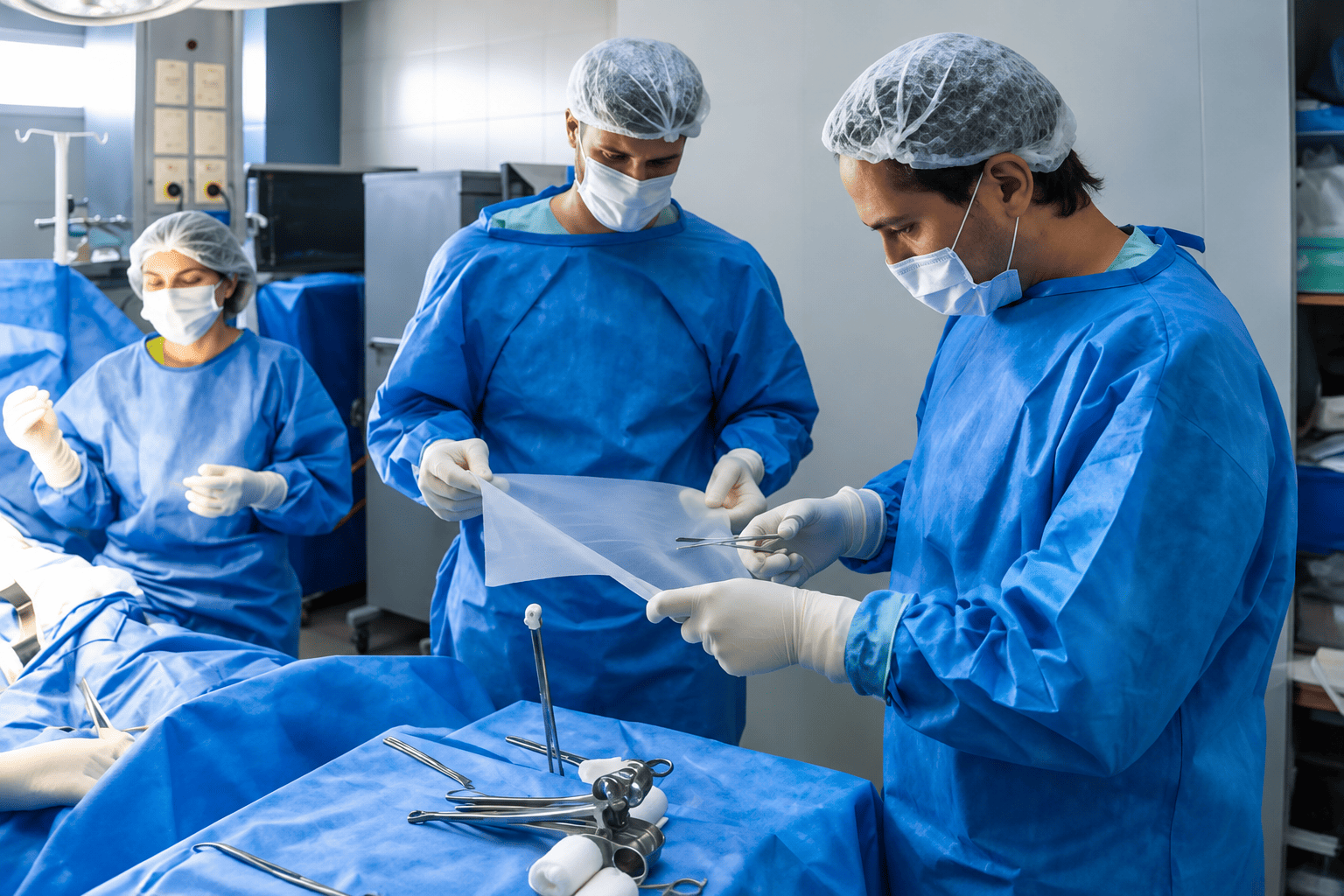
Laparoscopic surgery is a minimally invasive approach in which the surgeon uses a laparoscope and specialised instruments through small incisions.
Compared with conventional open surgery, minimally invasive approaches can offer benefits such as:
Bombay Hospital Jaipur's General Surgery department specialises in minimally invasive laparoscopic procedures and states that laparoscopic surgery can provide less scarring, quicker recovery and shorter hospital stays.
However, laparoscopic surgery is not automatically the best option for every patient. The appropriate technique depends on the type of hernia, its size, previous surgeries, general health and surgeon's assessment.
The procedure varies according to the surgical approach and type of hernia.
Before Surgery
Your surgeon will review:
You may also undergo routine preoperative investigations as recommended.
During Surgery
Under appropriate anaesthesia, the surgeon accesses the hernia and carefully manages the protruding tissue.
The weakened abdominal wall is then repaired and reinforced. In many cases, a surgical mesh may be placed to provide additional strength and reduce the likelihood of recurrence.
For laparoscopic surgery, several small incisions may be used to introduce the camera and surgical instruments.
After Surgery
You are monitored in the recovery area and provided with appropriate pain management and postoperative instructions.
The duration of hospitalisation depends on the procedure, your recovery and your overall health.
Hernia repair is no longer limited to one surgical approach. Depending on the patient's condition, surgeons may consider:
The choice is based on factors such as hernia type, size, location, previous surgery, recurrence and overall health.
Safe surgical care depends not only on the procedure but also on accurate diagnosis, appropriate surgical planning, anaesthesia support and postoperative monitoring.
Bombay Hospital Jaipur's General Surgery department has facilities including:
Advanced Operation Theatres
The hospital has advanced operating theatres designed to support a range of general and laparoscopic surgical procedures.
ICG Laparoscopic Camera
The department is equipped with an ICG (Indocyanine Green) laparoscopic camera, supporting advanced laparoscopic surgical visualisation where clinically appropriate.
Diagnostic & Imaging Facilities
High-resolution imaging and diagnostic facilities can support evaluation and treatment planning when additional assessment is required.
Postoperative Monitoring
Postoperative care includes monitored recovery facilities and access to fully equipped intensive care services when required.
Recovery varies according to:
After surgery, you may experience some discomfort around the surgical area. This generally improves as healing progresses.
Your surgeon may advise you to:
How Soon Can You Return to Normal Activities?
There is no single recovery timeline for everyone. Light activities may often be resumed relatively early, while strenuous exercise and heavy lifting may need to be restricted for longer.
Your surgeon will provide specific instructions based on the repair performed.
In the early postoperative period, some patients may prefer lighter meals before gradually returning to their regular diet.
A balanced diet can support recovery and help prevent constipation, which may otherwise increase abdominal pressure.
Depending on your condition, your doctor may recommend:
If you have another medical condition requiring dietary restrictions, your diet should be planned accordingly.
Like any surgical procedure, hernia repair can involve certain risks.
Potential complications may include:
The risk depends on the patient's health, type of hernia, surgical technique and whether the operation is planned or performed as an emergency.
Your surgeon should discuss the expected benefits and potential risks before treatment.
Choosing a hospital for hernia surgery involves more than looking at the procedure itself. Patients need access to experienced surgical care, diagnostics, anaesthesia support and postoperative monitoring.
Bombay Hospital Jaipur's General Surgery department provides:
The hospital describes its General Surgery department as a specialised unit for gastrointestinal and abdominal surgical conditions, with a team including surgeons, gastroenterologists, anaesthetists and nursing staff.
Bombay Hospital Jaipur is also a tertiary-care hospital with multiple specialties and super-specialties available under one roof, which can be valuable for patients with additional medical conditions requiring coordinated care.
Dr. Dhiraj Agarwal
Consultant Laparoscopic General & GI Surgeon
Qualifications: MS (Surgery), FIAGES, FMAS, FAIS
Experience: 20 years
Dr. Dhiraj Agarwal is listed by Bombay Hospital Jaipur as a Consultant Laparoscopic General & GI Surgeon. His clinical profile includes more than two decades of surgical experience and expertise in laparoscopic general and gastrointestinal surgery.
The surgical team works alongside anaesthesia, nursing and other hospital specialists to support patients through diagnosis, surgery and recovery.
At Bombay Hospital Jaipur, your treatment can be approached through a structured process:
Step 1: Consultation
Discuss your symptoms, swelling, pain and medical history with a general surgeon.
Step 2: Clinical Evaluation
The surgeon examines the suspected hernia and determines whether additional diagnostic testing is required.
Step 3: Treatment Planning
Based on the type and characteristics of the hernia, the surgeon discusses observation, lifestyle measures or surgical repair.
Step 4: Preoperative Assessment
If surgery is recommended, your health and anaesthesia requirements are assessed before the procedure.
Step 5: Hernia Repair
The selected surgical technique is performed according to your individual condition.
Step 6: Recovery & Monitoring
You receive postoperative monitoring, pain management and instructions for wound care and activity.
Step 7: Follow-Up
Follow-up appointments help assess healing and guide your return to normal activities.
You should consider a surgical consultation if you notice:
Seek urgent medical attention if a hernia becomes suddenly painful, firm or irreducible, particularly if you also experience vomiting, abdominal swelling, fever or difficulty passing stool or gas.
Early evaluation can help determine whether the hernia can be safely monitored or whether repair should be considered.
An established abdominal wall hernia generally does not permanently close by itself. Small, minimally symptomatic hernias may sometimes be monitored, but symptomatic or enlarging hernias may require surgical repair.
No. Treatment depends on the type, size, symptoms and individual risk factors. Some patients may be monitored, while others may benefit from planned surgery.
Inguinal hernia is one of the most common types and occurs in the groin. Other common abdominal wall hernias include umbilical and incisional hernias.
Neither approach is universally better. Laparoscopic repair can offer the advantages of smaller incisions and potentially faster recovery in appropriately selected patients. The surgeon chooses the approach based on the hernia and the patient's overall condition.
Mesh is commonly used in many types of hernia repairs to reinforce the weakened abdominal wall. Whether mesh is appropriate depends on the specific hernia and surgical plan.
The duration varies depending on the type of hernia, surgical approach and complexity of the repair. Your surgeon can provide a more accurate estimate after evaluation.
Recovery varies from patient to patient. Light activities may resume relatively soon, but strenuous exercise and heavy lifting may require a longer restriction period.
Recurrence is possible after hernia repair, although surgeons use techniques designed to minimise this risk. Factors such as the type of hernia, tissue strength, surgical technique, smoking, obesity and postoperative strain can influence outcomes.
Walking is generally encouraged as part of recovery, but strenuous exercise and heavy lifting should be resumed only according to your surgeon's instructions.
The General Surgery department lists treatment for inguinal, umbilical and incisional hernias, along with laparoscopic surgical care and other general and gastrointestinal procedures.
A hernia may begin as a small, painless swelling, but changes in size, discomfort or the ability to push the swelling back should not be ignored. A timely surgical evaluation can help determine the safest treatment approach and whether minimally invasive hernia repair is appropriate.
At Bombay Hospital Jaipur, patients have access to general and laparoscopic surgical expertise, advanced operating facilities, diagnostic support and postoperative care within a tertiary-care hospital environment.
Experiencing a painful or growing hernia? Schedule a consultation with the General Surgery team at Bombay Hospital Jaipur to discuss your symptoms and treatment options.
Book an Appointment | Consult a Hernia Specialist in Jaipur
MBBS, MS
General Surgeon
 Book an Appointment