 Cardiology
 Cardiovascular Thoracic Surgery
 Endocrinology
 Neurology
 Neuro Surgery
 Nephrology
 Urology
 Gastroenterology
 Pulmonology
  Plastic Surgery
 Nuclear Medicine
  Anesthesiology
  Transfusion Medicine
  Medical Oncology
  Surgical Oncology
  Radiation Oncology
  Critical Care Medicine
  ENT
ENT General Medicine
 General Surgery
 Gynaecology & Obstetrics
 Ophthalmology
 Orthopaedics
 Paediatrics and Neonatology
  Spine Surgery
 Cathlab
 MRI
(3.0 Tesla)
MRI
(3.0 Tesla) CT
Scan (128 Slice)
CT
Scan (128 Slice) 2D Echo
 TMT
TMT PFT
PFT EEG
EEG EMG
& NCS
EMG
& NCS Audiometry
 Flexible Laryngoscopy
 Endoscopy
& Colonoscopy
Endoscopy
& Colonoscopy Bronchoscopy
 Allergy Testing (Skin Prick Test-SPT)
 Microbiology
 Pathology
 Radio-diagnosis
 Radiation Therapy
 Physiotherapy
 Radiology
 Pharmacy
 AKU
Dialysis
AKU
Dialysis  Emergency Service
 Executive
Health Checkup
Executive
Health CheckupDr. Dhiraj Agarwal
MBBS, MS
General Surgeon

Piles, also known as hemorrhoids, are swollen blood vessels in and around the anus or lower rectum. They can cause symptoms such as bleeding, itching, pain, swelling and discomfort during bowel movements.
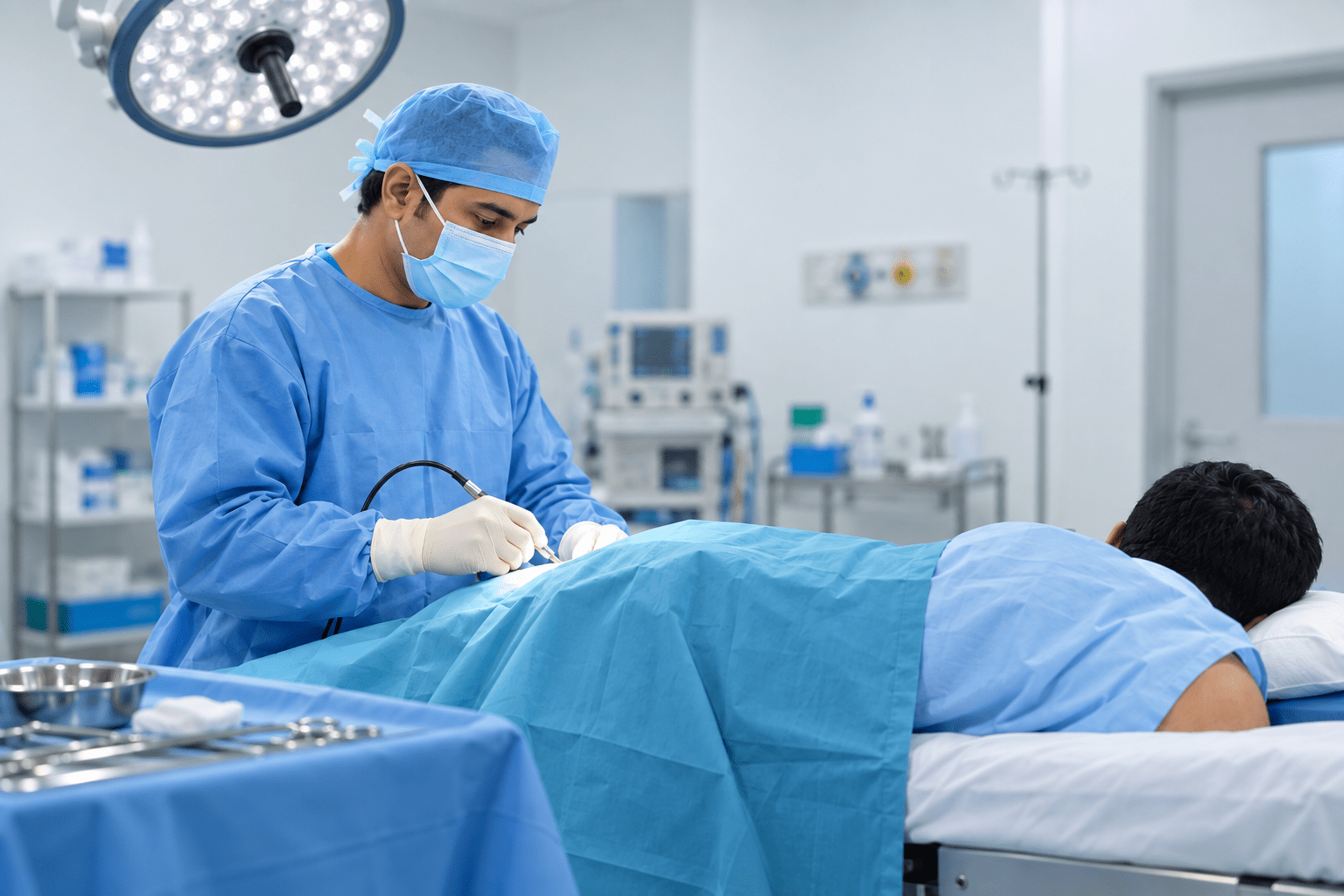
Mild piles may improve with dietary and lifestyle changes, but persistent, recurrent or advanced hemorrhoids may require a procedure or surgery. At Bombay Hospital Jaipur, the Department of Laparoscopic General and GI Surgery provides treatment for hemorrhoids, including advanced laser surgery, supported by modern surgical facilities and postoperative care.
The appropriate treatment depends on the type and severity of piles, symptoms and overall health.
Piles are enlarged and swollen veins in the anal region. They are broadly classified into:
Internal Piles
These develop inside the rectum. They may cause painless bleeding and, in more advanced cases, tissue may protrude through the anus.
External Piles
These develop under the skin around the anus and may cause pain, swelling, itching or a tender lump, particularly when a blood clot develops.
Piles can affect people of different ages and may be associated with constipation, prolonged straining, pregnancy, a low-fibre diet or prolonged sitting.
Symptoms can vary depending on the type and severity of hemorrhoids. Common signs include:
Rectal bleeding should not automatically be assumed to be piles. Other gastrointestinal conditions can cause similar symptoms, so persistent or unexplained bleeding should be evaluated by a doctor.
Several factors can increase pressure on the veins around the rectum and contribute to hemorrhoids, including:
Improving bowel habits and avoiding excessive straining can help reduce symptoms and may lower the risk of recurrence.
Treatment depends on the severity of symptoms.
Lifestyle & Medical Management
For mild piles, treatment may include:
Procedures & Surgery
When symptoms persist or piles become advanced, a surgical or procedural treatment may be recommended.
Bombay Hospital Jaipur's General Surgery department specifically lists laser surgery for hemorrhoids (piles) among its services and has modern laser surgery equipment.
The surgeon will determine whether laser treatment or another surgical approach is appropriate after examining the patient.
Laser treatment is a minimally invasive approach used for selected cases of hemorrhoids.
Depending on the specific technique and type of piles, laser energy may be used to treat the affected hemorrhoidal tissue while aiming to minimise damage to surrounding tissues.
Potential advantages of minimally invasive treatment may include:
However, laser treatment is not suitable for every patient. The choice of procedure depends on the grade of piles, symptoms, previous treatment and clinical assessment.
Before treatment, the surgeon evaluates your symptoms and performs an appropriate examination. Additional investigations may be recommended when required, particularly when the source of bleeding is uncertain.
During the procedure, the surgeon treats the enlarged hemorrhoidal tissue using the selected technique.
After treatment, patients are monitored and given instructions regarding:
The exact procedure and recovery period vary according to the treatment performed.
Recovery depends on the type of procedure and the severity of hemorrhoids.
Patients are generally advised to:
Your surgeon will provide personalised instructions regarding exercise, work and other activities.
Bombay Hospital Jaipur's General Surgery department provides specialised surgical care using minimally invasive approaches where appropriate. The department lists laser treatment for hemorrhoids, along with advanced operating theatres and modern laser surgery equipment.
The hospital also provides:
This allows patients to receive evaluation, treatment and postoperative care within a tertiary-care hospital environment.
Consult a surgeon if you experience:
Seek urgent medical attention for heavy bleeding, severe pain, dizziness, fainting or rapidly worsening symptoms.
Yes. Mild hemorrhoids may improve with dietary changes, better bowel habits and medical treatment. Surgery is generally considered when symptoms persist, recur or become more advanced.
Pain and discomfort vary between patients and depend on the procedure performed. Minimally invasive approaches may reduce tissue disruption, but some postoperative discomfort can still occur.
The duration depends on the treatment technique and severity of the hemorrhoids. Your surgeon can provide a more specific estimate after evaluation.
Recurrence is possible. Maintaining healthy bowel habits, avoiding constipation and following postoperative advice can help reduce the risk.
No. Rectal bleeding can have several causes. Persistent, recurrent or unexplained bleeding should be assessed by a medical professional rather than automatically attributed to hemorrhoids.
Don't continue to live with recurrent bleeding, pain or discomfort. Early evaluation can help identify the cause of your symptoms and determine whether lifestyle management, medication, laser treatment or another procedure is appropriate.
Consult the General Surgery team at Bombay Hospital Jaipur for personalised piles treatment and surgical care.
Book an Appointment | Consult a Piles Specialist in Jaipur
MBBS, MS
General Surgeon
 Book an Appointment