×


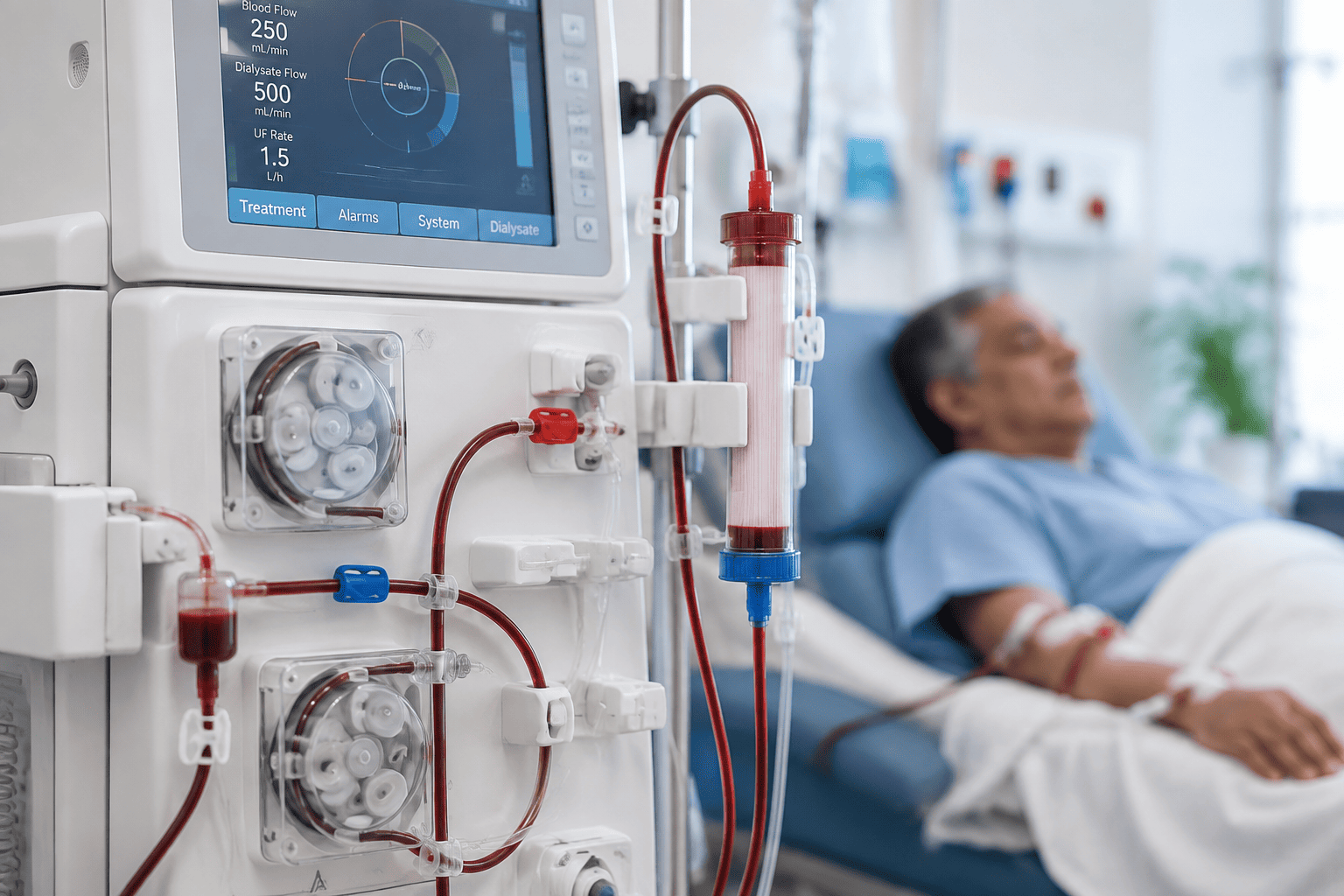
When the kidneys are no longer able to adequately remove waste, excess fluid and certain substances from the blood, dialysis may be required to perform some of these essential functions.
Dialysis is commonly used for people with advanced or end-stage kidney disease, although it may also be needed temporarily in certain cases of severe acute kidney injury.
At Bombay Hospital Jaipur, the Nephrology department provides comprehensive kidney care, including dialysis support, with specialist evaluation and ongoing management tailored to the patient's condition.
Dialysis is a treatment that helps remove waste products and excess fluid from the blood when the kidneys cannot perform these functions adequately.
Healthy kidneys continuously filter the blood and help maintain the body's balance of fluids, electrolytes and waste products. When kidney function becomes severely reduced, these substances can build up in the body.
Dialysis can help:
Dialysis does not restore normal kidney function. The frequency and duration of treatment depend on the patient's kidney function, overall health and treatment plan.
Dialysis may be recommended when kidney function has become severely impaired or when certain complications cannot be adequately controlled through other treatments.
It may be required in:
The decision to start dialysis is based on the patient's overall clinical condition rather than kidney function alone.
A nephrologist evaluates symptoms, blood-test results, urine output, fluid status and other medical factors before recommending dialysis.
There are two main forms of dialysis.
Haemodialysis uses a dialysis machine and a special filter called a dialyser to clean the blood.
Blood is circulated through the dialyser, where waste products and excess fluid are removed before the filtered blood is returned to the body.
Treatment schedules vary depending on the patient's medical requirements.
Peritoneal dialysis uses the lining of the abdomen, called the peritoneum, as a natural filtering membrane.
A special dialysis solution is introduced into the abdominal cavity through a catheter. Waste products and excess fluid move into the solution, which is then drained and replaced.
The suitability of each dialysis method depends on factors such as kidney function, overall health, lifestyle, home environment and medical suitability.
A typical haemodialysis session involves several stages:
The duration and frequency of sessions vary according to the patient's individual prescription.
For haemodialysis, a reliable way to access the bloodstream is required.
Common types include:
An AV fistula is often preferred for long-term haemodialysis when appropriate because it can provide durable vascular access. The nephrology team determines the most suitable option based on the patient's condition and treatment requirements.
Some patients feel comfortable during dialysis, while others may experience temporary symptoms such as:
These symptoms can have different causes, including changes in fluid balance or blood pressure during treatment. The dialysis team monitors patients and adjusts treatment when required.
Dialysis is an important part of treatment for many patients with advanced kidney disease, but kidney care involves more than dialysis sessions.
Patients may need to follow an individualised plan involving:
Dietary and fluid recommendations should always be personalised because requirements vary between patients.
For some patients with end-stage kidney disease, kidney transplantation may be another treatment option.
Dialysis may be required while a patient is being evaluated for transplantation or while waiting for a suitable kidney. However, not every patient is a candidate for transplantation.
A nephrologist can discuss the available options based on kidney function, age, overall health and other medical factors.
Bombay Hospital Jaipur's Nephrology department provides comprehensive care for kidney-related conditions and works alongside other specialties when required.
The hospital's renal-care infrastructure supports evaluation and management of patients with complex kidney conditions. Patients can also access related services such as Urology, Radiology and Critical Care within the tertiary-care hospital environment.
This integrated approach can be particularly useful for patients who have kidney disease along with conditions such as diabetes, hypertension, cardiovascular disease or urinary-tract problems.
You should consider consulting a nephrologist if you have:
Patients already receiving dialysis should maintain regular nephrology follow-up and report new symptoms promptly.
No. Many people with chronic kidney disease never require dialysis. Dialysis is generally considered when kidney function becomes severely reduced or complications cannot be adequately controlled through other treatment.
The schedule depends on the patient's kidney function, health and prescribed dialysis plan. Your nephrologist will determine the appropriate frequency and duration.
The dialysis process itself is not usually painful, although inserting needles for vascular access may cause temporary discomfort. Some patients can experience fatigue, cramps or blood-pressure changes during or after treatment.
Yes. Dialysis can sometimes be used temporarily in patients with severe acute kidney injury while the kidneys recover. In advanced chronic kidney disease, long-term dialysis or another form of kidney replacement therapy may be required.
Many people continue to work, spend time with family and participate in daily activities while receiving dialysis. Adjustments to diet, fluid intake, medicines and daily routines may be necessary.
Kidney transplantation may offer suitable patients greater independence from dialysis, but it is not appropriate for everyone. A nephrologist can assess whether transplantation may be an option based on the patient's health and individual circumstances.
Dialysis is an important treatment for patients whose kidneys can no longer adequately perform essential filtering functions. The right dialysis plan requires ongoing medical supervision, monitoring and management of the underlying kidney condition.
Consult the Nephrology team at Bombay Hospital Jaipur for personalised dialysis care and comprehensive kidney disease management.
 Book an Appointment
 Cardiology
 Cardiovascular Thoracic Surgery
 Endocrinology
 Neurology
 Neuro Surgery
 Nephrology
 Urology
 Gastroenterology
 Pulmonology
  Plastic Surgery
 Nuclear Medicine
  Anesthesiology
  Transfusion Medicine
  Medical Oncology
  Surgical Oncology
  Radiation Oncology
  Critical Care Medicine
  ENT
ENT General Medicine
 General Surgery
 Gynaecology & Obstetrics
 Ophthalmology
 Orthopaedics
 Paediatrics and Neonatology
  Spine Surgery
 Cathlab
 MRI
(3.0 Tesla)
MRI
(3.0 Tesla) CT
Scan (128 Slice)
CT
Scan (128 Slice) 2D Echo
 TMT
TMT PFT
PFT EEG
EEG EMG
& NCS
EMG
& NCS Audiometry
 Flexible Laryngoscopy
 Endoscopy
& Colonoscopy
Endoscopy
& Colonoscopy Bronchoscopy
 Allergy Testing (Skin Prick Test-SPT)
 Microbiology
 Pathology
 Radio-diagnosis
 Radiation Therapy
 Physiotherapy
 Radiology
 Pharmacy
 AKU
Dialysis
AKU
Dialysis  Emergency Service
 Executive
Health Checkup
Executive
Health Checkup