×


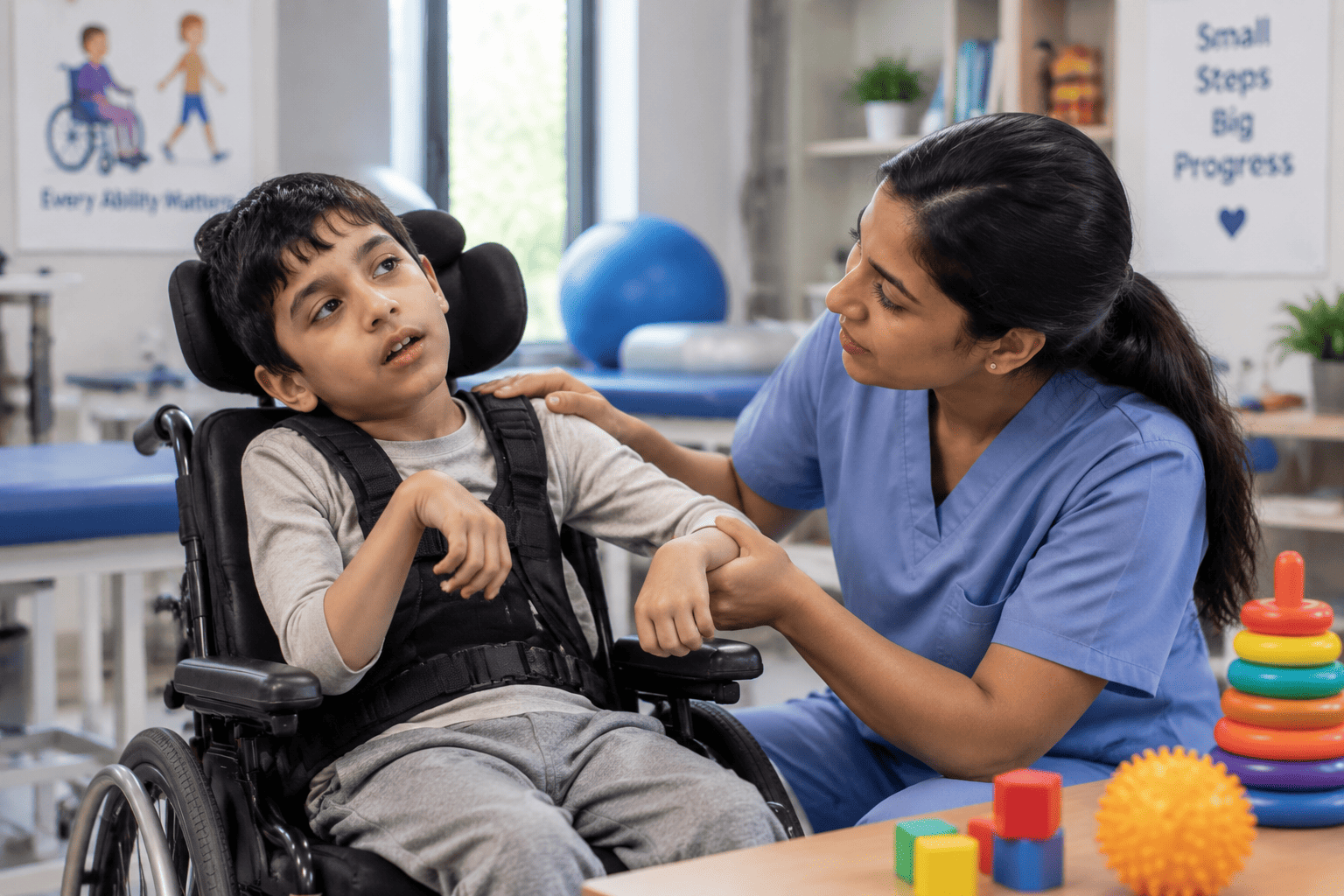
Cerebral palsy (CP) is a group of neurological conditions that affect movement, muscle tone, posture and coordination. It begins early in life and can affect children differently depending on the areas of the brain involved and the severity of the condition.
Some children may have mild difficulties with movement, while others may require ongoing support with mobility, communication, feeding or everyday activities. Early assessment, appropriate therapy and long-term management can help children develop functional skills and participate more independently in daily life.
At Bombay Hospital Jaipur, neurological evaluation and multidisciplinary care can help children with cerebral palsy receive personalised management based on their individual symptoms and developmental needs.
Cerebral palsy develops because of abnormal development or injury to the developing brain, affecting the body's ability to control movement and posture.
The condition generally begins during pregnancy, around the time of birth or during early childhood. The brain injury itself does not progressively worsen, although the child's symptoms and functional needs may change as they grow.
Cerebral palsy can affect:
Cerebral palsy can be classified according to the type of movement disorder.
This is the most common type and is associated with increased muscle tone or stiffness. It may affect the legs, arms or one side of the body.
Children may experience involuntary movements that can make controlled movement difficult.
This primarily affects balance, coordination and accuracy of movement.
Some children have features of more than one type of movement disorder.
The pattern and severity of symptoms vary considerably between children.
Signs can become apparent at different stages of development. Possible symptoms include:
Some children may also have associated problems involving vision, hearing, seizures, learning or behaviour.
Cerebral palsy can result from factors that affect brain development or cause injury to the developing brain.
Possible factors include:
In many cases, however, the exact cause cannot be identified.
Diagnosis involves understanding the child's developmental history and performing a detailed neurological and physical assessment.
Doctors may evaluate:
Depending on the child's symptoms, investigations such as brain MRI may be recommended to understand brain development or identify evidence of an underlying brain injury.
Bombay Hospital Jaipur provides advanced neurological diagnostic support, including MRI and CT imaging, along with neurophysiology investigations when clinically indicated.
There is currently no treatment that reverses the underlying brain injury responsible for cerebral palsy. However, early and personalised intervention can help improve functional abilities, mobility and independence.
Treatment is based on the child's symptoms and may involve several areas of care.
Physiotherapy is an important part of cerebral palsy management. It may focus on:
Therapy programmes should be adapted as the child grows and their functional needs change.
Occupational therapy can help children develop skills needed for everyday activities such as eating, dressing, writing, playing and using their hands.
Children with communication or speech difficulties may benefit from speech and language therapy. Children with swallowing difficulties may also require appropriate assessment and management.
Some children may require medicines or other specialist interventions to manage muscle stiffness, involuntary movements, seizures or associated symptoms.
The appropriate treatment depends on the child's individual condition and should be determined by the treating specialist.
Rehabilitation is not limited to improving walking. The broader goal is to help the child participate in home, school and social activities as independently as possible.
A personalised rehabilitation plan may include:
Bombay Hospital Jaipur's physiotherapy services include neurological rehabilitation programmes for conditions such as cerebral palsy, supporting children who require structured rehabilitation as part of their overall care.
Cerebral palsy is a lifelong condition, so ongoing monitoring can be important. A child's needs may change as they grow, particularly during periods of rapid physical development.
Regular follow-up can help identify:
The management plan can then be adjusted according to the child's development.
Bombay Hospital Jaipur provides neurological assessment supported by advanced diagnostic facilities and multidisciplinary care. The Neurology department has access to MRI, CT and specialised neurophysiology investigations, including EEG, EMG, NCV, RNS and evoked potentials when clinically appropriate.
Children requiring additional medical or rehabilitation support can also benefit from access to multiple specialties within a tertiary-care hospital environment.
Parents should consider a professional evaluation if their child:
Early evaluation can help identify the child's needs and start appropriate intervention as soon as possible.
Cerebral palsy results from an injury or abnormal development of the developing brain, and there is currently no cure that reverses this underlying condition. However, treatment and rehabilitation can help manage symptoms and improve function and independence.
Some children with cerebral palsy walk independently, while others may require walking aids or mobility devices. Walking ability depends on the type and severity of cerebral palsy and the individual child's motor function.
Yes. Physiotherapy can help improve mobility, strength, flexibility, balance and functional movement. The programme should be personalised according to the child's abilities and goals.
The brain injury that causes cerebral palsy does not progressively worsen. However, physical symptoms and functional challenges can change as a child grows, which is why regular assessment and rehabilitation are important.
Yes. Some children may experience difficulties with speech, language or the muscles involved in communication. Speech and language therapy may be recommended when appropriate.
Some children with cerebral palsy may also experience seizures. If seizures occur, neurological evaluation and appropriate treatment are important.
Cerebral palsy affects every child differently. Early recognition, appropriate neurological evaluation and a personalised rehabilitation plan can help address the child's individual challenges while supporting their strengths and independence.
Consult the Neurology team at Bombay Hospital Jaipur for personalised cerebral palsy evaluation, management and rehabilitation support.
 Book an Appointment
 Cardiology
 Cardiovascular Thoracic Surgery
 Endocrinology
 Neurology
 Neuro Surgery
 Nephrology
 Urology
 Gastroenterology
 Pulmonology
  Plastic Surgery
 Nuclear Medicine
  Anesthesiology
  Transfusion Medicine
  Medical Oncology
  Surgical Oncology
  Radiation Oncology
  Critical Care Medicine
  ENT
ENT General Medicine
 General Surgery
 Gynaecology & Obstetrics
 Ophthalmology
 Orthopaedics
 Paediatrics and Neonatology
  Spine Surgery
 Cathlab
 MRI
(3.0 Tesla)
MRI
(3.0 Tesla) CT
Scan (128 Slice)
CT
Scan (128 Slice) 2D Echo
 TMT
TMT PFT
PFT EEG
EEG EMG
& NCS
EMG
& NCS Audiometry
 Flexible Laryngoscopy
 Endoscopy
& Colonoscopy
Endoscopy
& Colonoscopy Bronchoscopy
 Allergy Testing (Skin Prick Test-SPT)
 Microbiology
 Pathology
 Radio-diagnosis
 Radiation Therapy
 Physiotherapy
 Radiology
 Pharmacy
 AKU
Dialysis
AKU
Dialysis  Emergency Service
 Executive
Health Checkup
Executive
Health Checkup