×

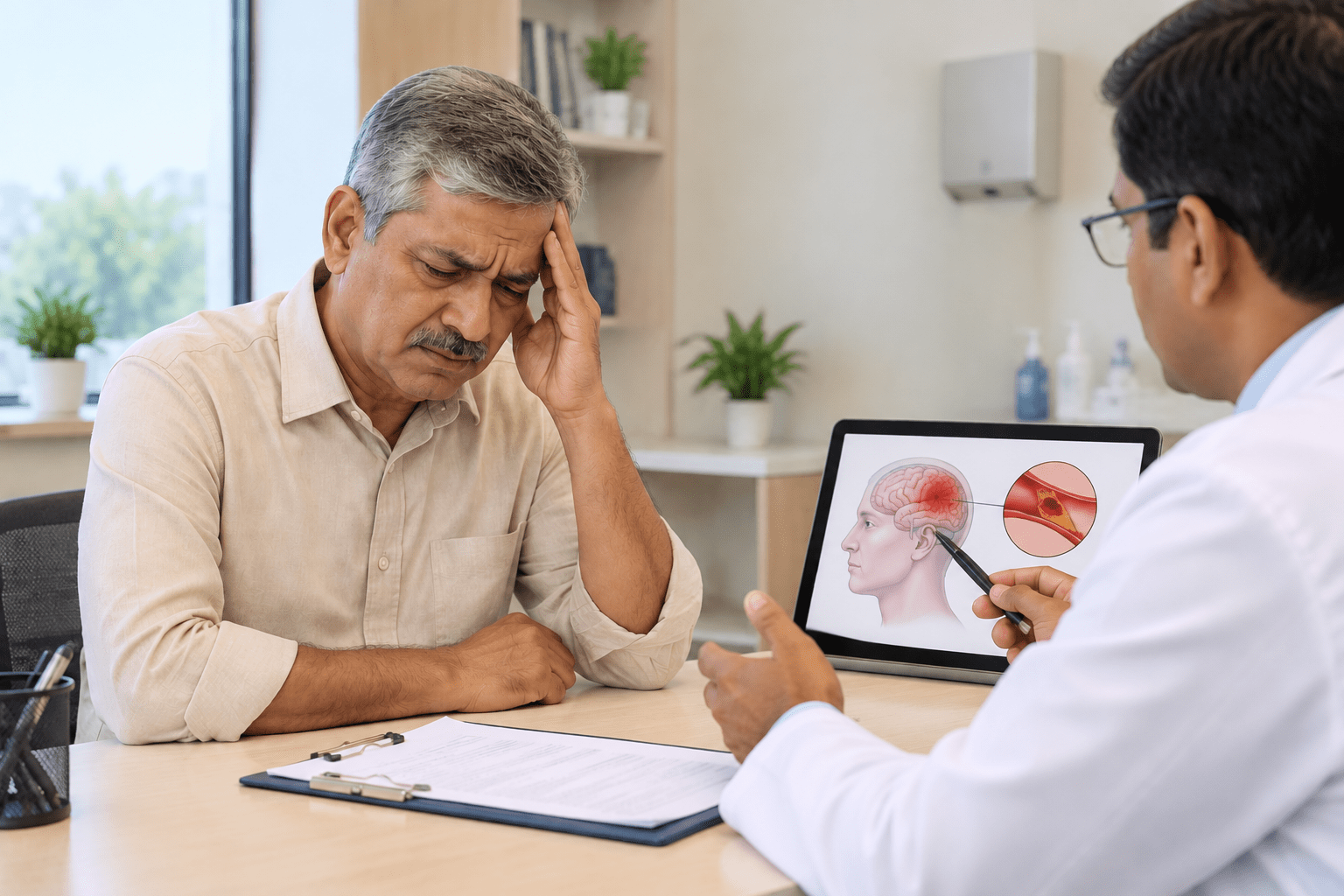
A stroke occurs when blood flow to part of the brain is interrupted or when a blood vessel in the brain bleeds. Because brain cells can be damaged within a short period, stroke is a medical emergency that requires immediate evaluation and treatment.
At Bombay Hospital Jaipur, the Department of Neurology provides comprehensive care for stroke and acute neurological emergencies. The hospital's neuro-interventional team is equipped to handle acute stroke cases with rapid diagnosis and treatment, while 24/7 emergency services support patients requiring urgent neurological care.
A stroke happens when part of the brain does not receive adequate blood and oxygen or when bleeding occurs within the brain.
There are two main types:
Ischemic Stroke
This is caused by a blood clot or blockage that reduces blood flow to part of the brain. It is the most common type of stroke.
Hemorrhagic Stroke
This occurs when a blood vessel in the brain ruptures and causes bleeding. It requires immediate medical assessment and management.
The treatment approach depends on the type of stroke, its location, severity and how quickly the patient receives medical attention.
Knowing the warning signs can help you seek emergency treatment without delay.
Common symptoms include:
Do not wait for symptoms to improve on their own. A suspected stroke should be treated as an emergency.
Several factors can increase the risk of stroke, including:
Managing these risk factors can play an important role in reducing future stroke risk.
The first step is a neurological and medical assessment to understand the patient's symptoms and determine how urgently treatment is needed.
Diagnostic imaging may include CT or MRI scans of the brain, depending on the clinical situation. Bombay Hospital Jaipur has advanced MRI and CT facilities for neurological diagnosis. The Neurology department also has access to neurophysiology investigations including EEG, EMG, NCV, RNS and evoked potentials when clinically appropriate.
The aim is to identify the type and extent of the stroke and guide appropriate treatment.
Stroke treatment is highly time-sensitive and depends on whether the stroke is caused by a blockage or bleeding.
Patients with an acute ischemic stroke may be evaluated for treatments that restore blood flow when they meet appropriate clinical criteria. In selected cases, neuro-interventional treatment may also be considered.
For hemorrhagic stroke, treatment focuses on controlling bleeding, managing pressure and addressing the underlying cause. Some patients may require neurosurgical intervention.
Because every stroke is different, treatment decisions are made after urgent clinical and imaging evaluation.
Depending on the patient's condition, treatment may involve medicines to manage blood pressure, cholesterol, blood clotting, blood sugar or other contributing factors.
Doctors also assess and manage the underlying cause of the stroke to reduce the risk of another event.
Recovery does not end after emergency treatment. Some patients may experience weakness, balance problems, difficulty speaking, swallowing difficulties, memory changes or challenges with everyday activities.
A personalised rehabilitation programme may involve:
Bombay Hospital Jaipur provides neurological rehabilitation through its physiotherapy services, including specialised programmes for patients recovering from stroke.
Bombay Hospital Jaipur's Neurology department works in coordination with Neurosurgery, Critical Care, Neurointerventional Radiology and Neurophysiology for comprehensive neurological care. The hospital has advanced MRI and CT imaging along with specialised neurophysiology testing.
For emergencies, the hospital's Emergency Department operates 24/7 and is equipped to manage strokes and other critical conditions.
Seek emergency medical attention immediately if someone suddenly develops facial weakness, one-sided weakness or numbness, difficulty speaking, vision changes, severe dizziness, loss of balance or other sudden neurological symptoms.
Do not drive the patient yourself if emergency medical transport is available. Note the time when symptoms were first noticed, as this information can be important for the treating medical team.
Outcomes depend on the type and severity of stroke, the affected area of the brain and how quickly treatment begins. Early diagnosis and appropriate treatment can help reduce brain injury and improve recovery prospects.
No. Many strokes are managed with emergency medical or interventional treatment. Surgery may be considered in selected cases, particularly for certain types of brain bleeding or complications.
A TIA, or transient ischemic attack, causes stroke-like symptoms that resolve because the blockage is temporary. Although symptoms may disappear, a TIA can be a warning sign of a future stroke and requires medical evaluation.
Yes. Recovery varies considerably between patients. Rehabilitation, treatment of underlying risk factors and follow-up care can support recovery and help patients regain independence.
Controlling blood pressure, diabetes and cholesterol, taking prescribed medicines correctly, avoiding smoking and following recommended lifestyle changes can help reduce future stroke risk.
Stroke requires speed, specialist evaluation and coordinated care. If you notice sudden neurological symptoms, seek emergency medical attention immediately.
For stroke evaluation, treatment and follow-up care, Bombay Hospital Jaipur's Neurology team provides comprehensive neurological services supported by advanced diagnostics, neuro-interventional expertise, emergency care and rehabilitation.
Book a Neurology consultation or contact the 24/7 Emergency Department for urgent stroke symptoms.
 Book an Appointment
 Cardiology
 Cardiovascular Thoracic Surgery
 Endocrinology
 Neurology
 Neuro Surgery
 Nephrology
 Urology
 Gastroenterology
 Pulmonology
  Plastic Surgery
 Nuclear Medicine
  Anesthesiology
  Transfusion Medicine
  Medical Oncology
  Surgical Oncology
  Radiation Oncology
  Critical Care Medicine
  ENT
ENT General Medicine
 General Surgery
 Gynaecology & Obstetrics
 Ophthalmology
 Orthopaedics
 Paediatrics and Neonatology
  Spine Surgery
 Cathlab
 MRI
(3.0 Tesla)
MRI
(3.0 Tesla) CT
Scan (128 Slice)
CT
Scan (128 Slice) 2D Echo
 TMT
TMT PFT
PFT EEG
EEG EMG
& NCS
EMG
& NCS Audiometry
 Flexible Laryngoscopy
 Endoscopy
& Colonoscopy
Endoscopy
& Colonoscopy Bronchoscopy
 Allergy Testing (Skin Prick Test-SPT)
 Microbiology
 Pathology
 Radio-diagnosis
 Radiation Therapy
 Physiotherapy
 Radiology
 Pharmacy
 AKU
Dialysis
AKU
Dialysis  Emergency Service
 Executive
Health Checkup
Executive
Health Checkup