 Cardiology
 Cardiovascular Thoracic Surgery
 Endocrinology
 Neurology
 Neuro Surgery
 Nephrology
 Urology
 Gastroenterology
 Pulmonology
  Plastic Surgery
 Nuclear Medicine
  Anesthesiology
  Transfusion Medicine
  Medical Oncology
  Surgical Oncology
  Radiation Oncology
  Critical Care Medicine
  ENT
ENT General Medicine
 General Surgery
 Gynaecology & Obstetrics
 Ophthalmology
 Orthopaedics
 Paediatrics and Neonatology
  Spine Surgery
 Cathlab
 MRI
(3.0 Tesla)
MRI
(3.0 Tesla) CT
Scan (128 Slice)
CT
Scan (128 Slice) 2D Echo
 TMT
TMT PFT
PFT EEG
EEG EMG
& NCS
EMG
& NCS Audiometry
 Flexible Laryngoscopy
 Endoscopy
& Colonoscopy
Endoscopy
& Colonoscopy Bronchoscopy
 Allergy Testing (Skin Prick Test-SPT)
 Microbiology
 Pathology
 Radio-diagnosis
 Radiation Therapy
 Physiotherapy
 Radiology
 Pharmacy
 AKU
Dialysis
AKU
Dialysis  Emergency Service
 Executive
Health Checkup
Executive
Health CheckupDr. Vikas Purohit
MBBS, MD
DM (Cardiology)
Cardiologist


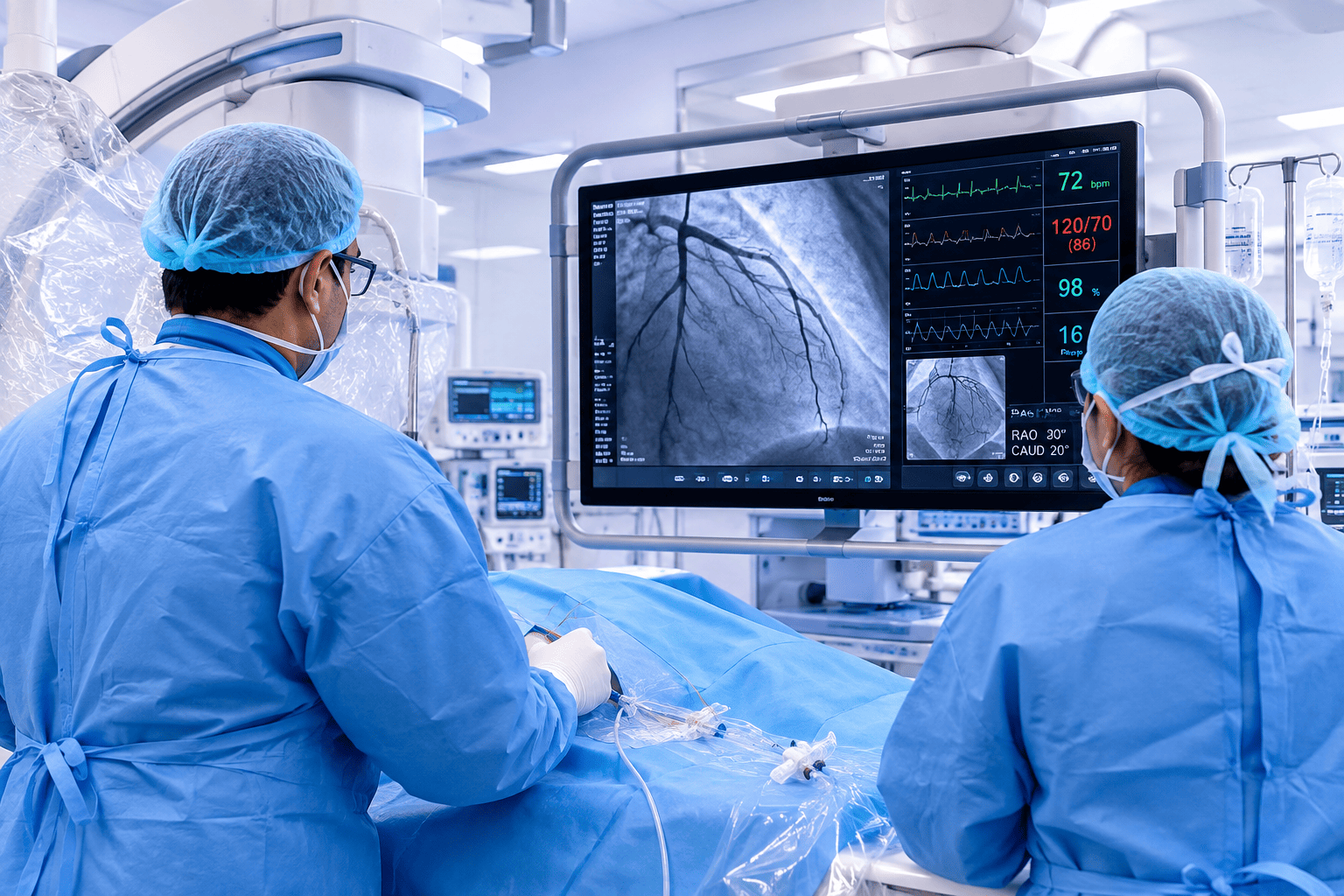
Heart disease remains one of the leading causes of serious health complications, but advances in interventional cardiology have made it possible to treat many blocked heart arteries without the need for open-heart surgery. Coronary Angioplasty, also known as Percutaneous Coronary Intervention (PCI), is a minimally invasive procedure that restores blood flow to the heart by opening narrowed or blocked coronary arteries.
At Bombay Hospital Jaipur, we provide advanced angioplasty in Jaipur using state-of-the-art cardiac technology, modern Cath Lab facilities, and evidence-based treatment protocols. Our experienced interventional cardiologists work closely with cardiac surgeons, imaging specialists, and critical care experts to deliver personalised care for patients with coronary artery disease, chest pain, and heart attacks.
Whether you have recently been diagnosed with a blocked artery or require emergency treatment for a heart attack, our multidisciplinary Heart Team is committed to providing timely, comprehensive, and compassionate cardiac care.
Book a consultation with our cardiology specialists today.
Angioplasty is a minimally invasive procedure performed to open narrowed or blocked coronary arteries that supply blood to the heart muscle. It is commonly used to treat coronary artery disease (CAD), a condition in which fatty deposits (plaque) build up inside the arteries, restricting blood flow.
During the procedure, a thin catheter with a small balloon at its tip is guided through a blood vessel—usually from the wrist or groin—to the blocked artery. The balloon is gently inflated to widen the artery, and in most cases, a coronary stent is placed to help keep the artery open and maintain healthy blood flow.
Angioplasty helps relieve symptoms such as chest pain, improves blood supply to the heart, and reduces the risk of complications associated with blocked arteries.
Coronary artery disease develops when cholesterol, fat, and other substances accumulate inside the coronary arteries, forming plaques. Over time, these plaques narrow the arteries and reduce the flow of oxygen-rich blood to the heart muscle.
If a plaque ruptures and a blood clot forms, the artery may become completely blocked, leading to a heart attack.
Risk factors include:
Early diagnosis and appropriate treatment can help prevent disease progression and improve long-term heart health.
Coronary artery disease may develop gradually, and some people experience few or no symptoms in the early stages.
Common symptoms include:
If symptoms occur suddenly or are accompanied by severe chest pain and breathlessness, immediate medical attention is essential.
Angioplasty may be recommended when coronary artery blockages significantly reduce blood flow or when symptoms persist despite medication and lifestyle modifications.
Your cardiologist may recommend angioplasty if you have:
The decision to perform angioplasty is based on clinical evaluation, imaging findings, and the overall health of the patient.
Angioplasty is commonly used in the treatment of:
For suitable patients, angioplasty offers several advantages over more invasive surgical procedures.
Benefits include:
Different angioplasty techniques are used depending on the patient's condition and the nature of the arterial blockage.
Balloon Angioplasty
A small balloon is inflated inside the narrowed artery to widen the vessel and improve blood flow.
Coronary Stent Placement
In most angioplasty procedures, a stent is placed to keep the artery open after balloon expansion.
Drug-Eluting Stents (DES)
These stents gradually release medication to help reduce the risk of the artery narrowing again.
Primary Angioplasty (Primary PCI)
Performed as an emergency procedure during an acute heart attack to restore blood flow as quickly as possible.
Complex Coronary Intervention
Advanced angioplasty techniques may be used for complex or multiple coronary artery blockages based on the patient's clinical condition.
Step 1 – Clinical Evaluation
Your cardiologist reviews your medical history, symptoms, diagnostic tests, and coronary angiography findings.
Step 2 – Preparation
The procedure is usually performed under local anaesthesia with mild sedation.
Step 3 – Catheter Insertion
A thin catheter is inserted through an artery in the wrist (radial approach) or groin (femoral approach) and guided to the coronary arteries.
Step 4 – Balloon Inflation
A tiny balloon is inflated at the site of the blockage to widen the artery.
Step 5 – Stent Placement
A coronary stent is commonly deployed to maintain blood flow and reduce the likelihood of future narrowing.
Step 6 – Recovery
Following the procedure, patients are monitored in the Cardiac Intensive Care Unit (CICU) or recovery area before discharge, depending on their clinical condition.
Successful angioplasty depends on accurate diagnosis, advanced imaging, and precision-guided intervention.
At Bombay Hospital Jaipur, our cardiac care infrastructure includes:
Our integrated cardiac facilities support comprehensive diagnosis, safe intervention, and personalised post-procedure care.
Recovery after angioplasty is generally quicker than open-heart surgery, although recovery time varies depending on the patient's overall health and the complexity of the procedure.
Typical Recovery Timeline
First 24 Hours
Day 2–3
Within One Week
Within One Month
Long-term success depends on adopting a heart-healthy lifestyle and following your cardiologist's recommendations.
Patients are encouraged to:
These measures help improve long-term cardiovascular health and reduce the risk of future cardiac events.
Although angioplasty is a commonly performed and generally safe procedure, every medical intervention carries some risk.
Possible complications include:
Our cardiac specialists carefully evaluate each patient and follow established safety protocols to minimise these risks.
Bombay Hospital Jaipur combines experienced specialists, advanced technology, and comprehensive cardiac services to provide high-quality care for patients with coronary artery disease.
Our strengths include:
Our team is committed to supporting patients through every stage of diagnosis, treatment, recovery, and long-term heart health.
Successful angioplasty requires close collaboration between experienced specialists. At Bombay Hospital Jaipur, every patient benefits from a multidisciplinary Heart Team approach.
Our team includes:
Working together, our specialists evaluate each patient's condition and recommend the most appropriate treatment based on clinical findings and individual needs.
Your treatment journey typically includes:
This structured approach ensures coordinated care from diagnosis through recovery.
Consult a cardiologist promptly if you experience:
Early evaluation allows timely diagnosis and treatment, helping reduce the risk of serious cardiac complications.
Coronary angioplasty is a minimally invasive procedure that opens narrowed or blocked coronary arteries to improve blood flow to the heart.
No. Angiography is a diagnostic test used to identify blocked arteries, while angioplasty is the treatment performed to open those blockages.
In many cases, a coronary stent is placed during angioplasty to help keep the artery open. Your cardiologist will determine the most appropriate treatment based on your condition.
The procedure usually takes between 30 minutes and two hours, depending on the complexity of the blockage.
Most patients experience minimal discomfort because the procedure is performed under local anaesthesia with mild sedation.
Many patients are discharged within one to three days, although hospital stay depends on the reason for angioplasty and overall recovery.
While modern stents significantly reduce the risk, arteries can narrow again in some patients. Regular follow-up and lifestyle modifications are important for maintaining long-term heart health.
Most patients gradually return to routine activities within a few days to a few weeks, depending on their recovery and medical advice.
The most appropriate treatment depends on the number of blocked arteries, their location, overall heart function, and individual patient factors. Your Heart Team will recommend the treatment best suited to your condition.
Bombay Hospital Jaipur offers experienced interventional cardiologists, advanced Cath Lab technology, comprehensive cardiac diagnostics, dedicated CICU facilities, and personalised care for patients requiring coronary angioplasty.
If you are experiencing chest pain, shortness of breath, or have been diagnosed with coronary artery disease, timely evaluation is essential. Early diagnosis and appropriate treatment can help prevent complications and improve long-term heart health.
At Bombay Hospital Jaipur, our experienced interventional cardiologists provide comprehensive evaluation and advanced angioplasty services using modern cardiac technology and a patient-centred approach.
Schedule your consultation today and take the first step towards better heart health.

MBBS, MD
DM (Cardiology)
Cardiologist

MBBS, MD, DM (Cardiology)
MRCP (UK)
Cardiologist

MBBS
PGDCC
Non Invasive Cardiologist
 Book an Appointment